Pencil Control Worksheets for Kids: Paths, Curves and Loops
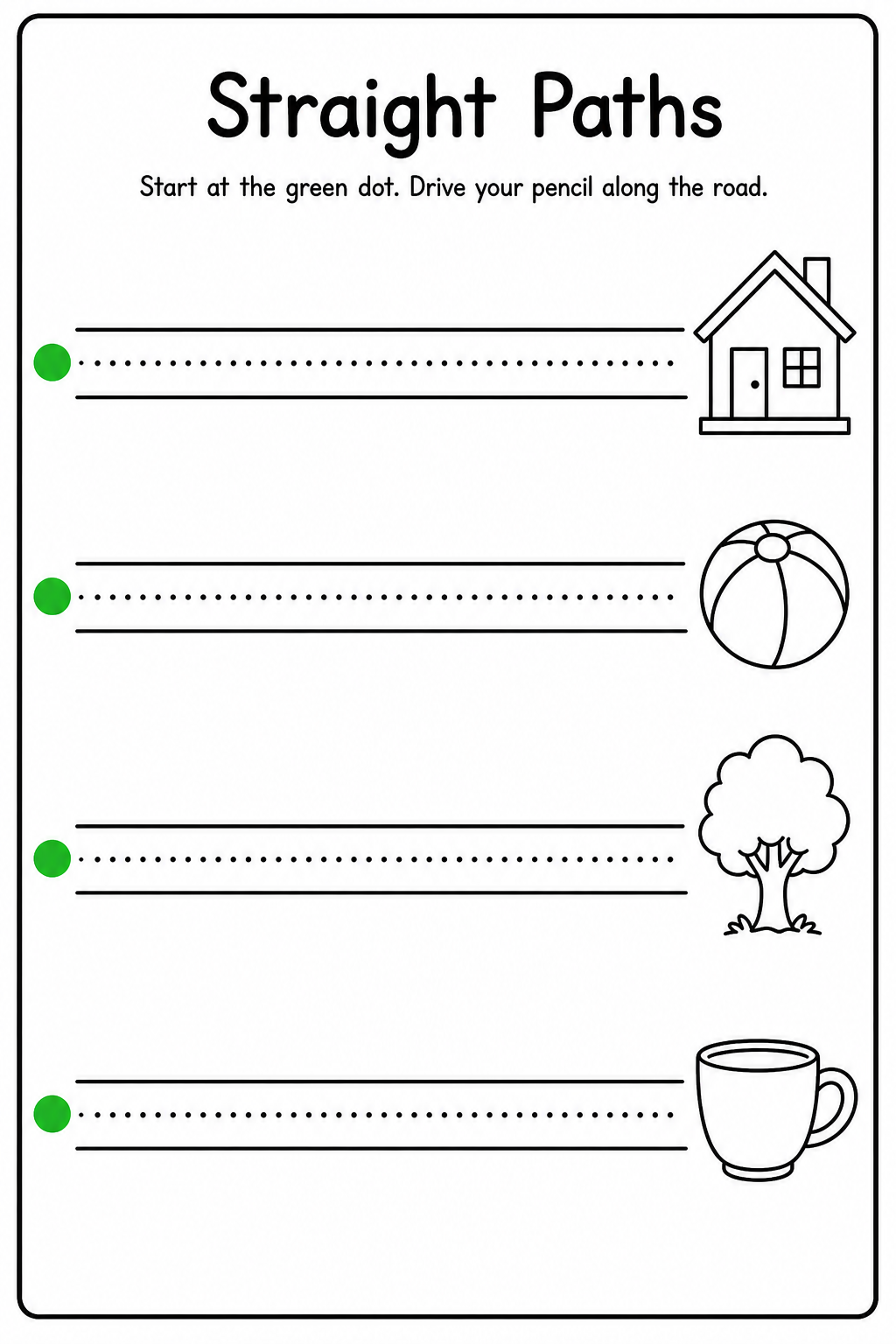
Before a child can write letters neatly, the hand needs practice in holding a pencil and moving it with control. These free printable pencil control worksheets for kids give that practice in a playful way. Children steer their pencil along wide roads, wavy paths, bouncing hills, spirals and loop-the-loops, trying to stay between the lines without lifting the pencil.
Each page uses friendly pictures like a snail, a kite, a rainbow and a winding road, so the activity feels like play rather than work. The worksheets suit preschool and nursery children, and also help older learners who want steadier, smoother handwriting.
How to play
- Print the worksheet pages on A4 paper. One page a day is enough for young children.
- Ask your child to sit comfortably and hold a pencil or crayon with three fingers, with the paper held steady by the other hand.
- Starting at the green dot, move the pencil along each path to the end, trying to stay inside the two guide lines without lifting the pencil.
- Finish by colouring the small pictures on the page and talking about the shapes of the paths: straight, wavy, zig-zag or looping.
Pencil control is the bridge between scribbling and real handwriting. While your child follows these paths, they are strengthening the small muscles of the fingers and wrist, learning to start and stop a line where they want, and training the eyes and hand to work together. The left-to-right direction of every path also prepares them for reading and writing on a line. Children practise straight, curved, wavy, zig-zag and looping movements, which are the exact strokes hidden inside letters and numbers. Keep sessions short and cheerful, about ten minutes, and praise effort rather than neatness. Steadier hands make letter formation much easier later.
Frequently asked questions
What age are pencil control worksheets suitable for?
How is this different from letter tracing?
Which pencil or crayon should my child use?
How often should we practise?
Are these worksheets free to print at home?
More printable worksheets
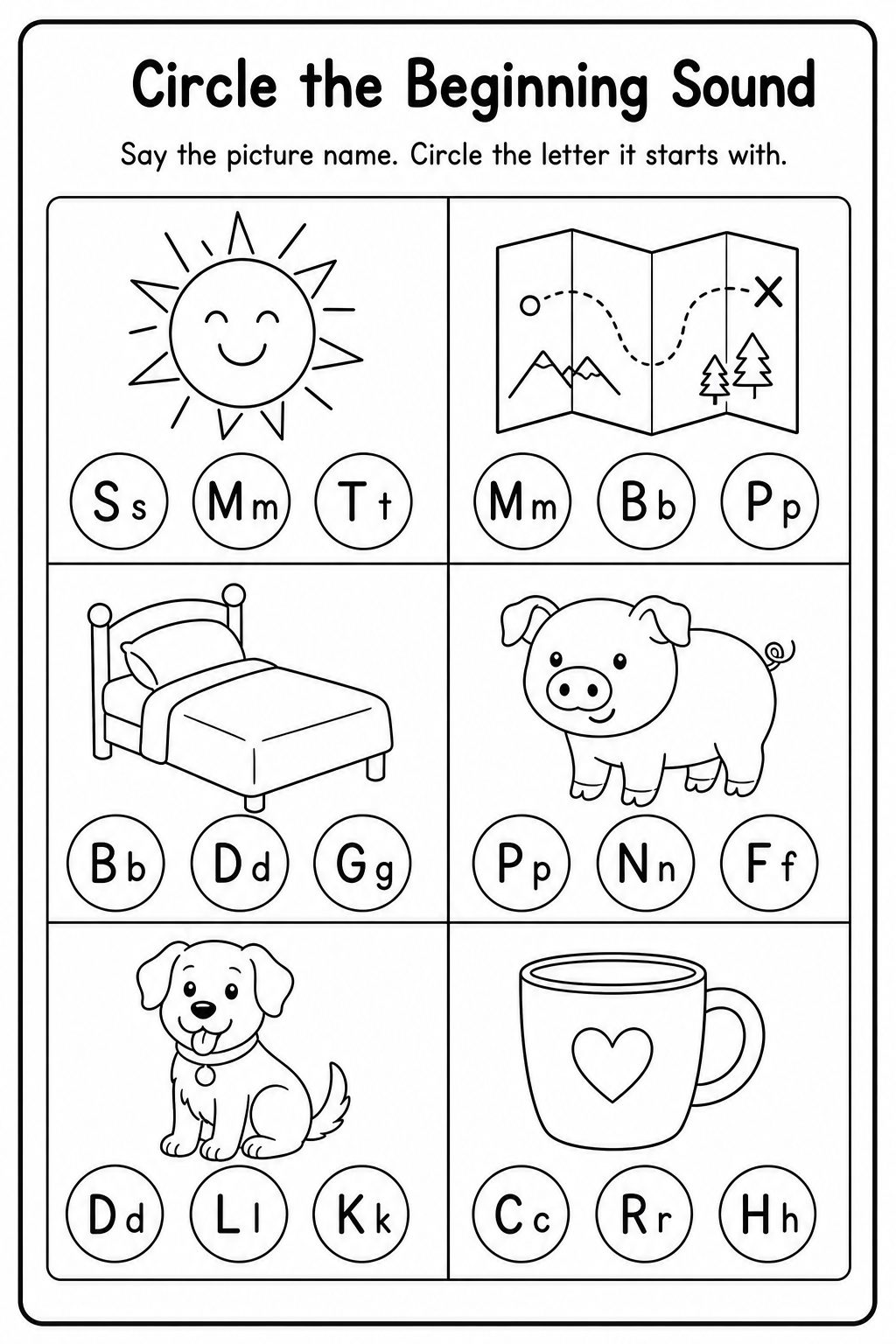 ⭐
Phonics Worksheets for Kids: CVC and Sight Words📄 Printable Worksheets · Age 5-6
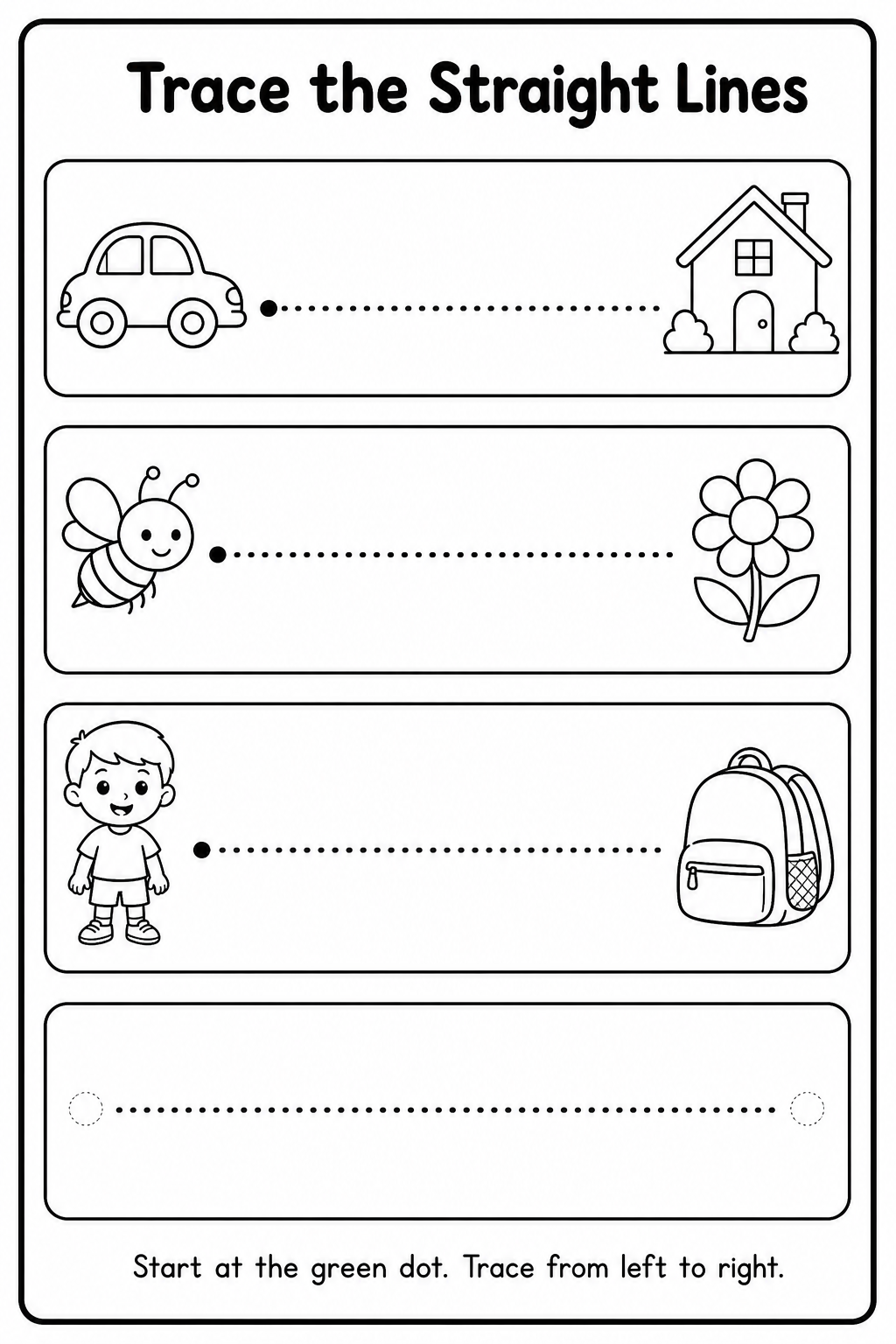 ⭐
Pencil Control Worksheets for Kids: Lines and Curves📄 Printable Worksheets · Age 3-4
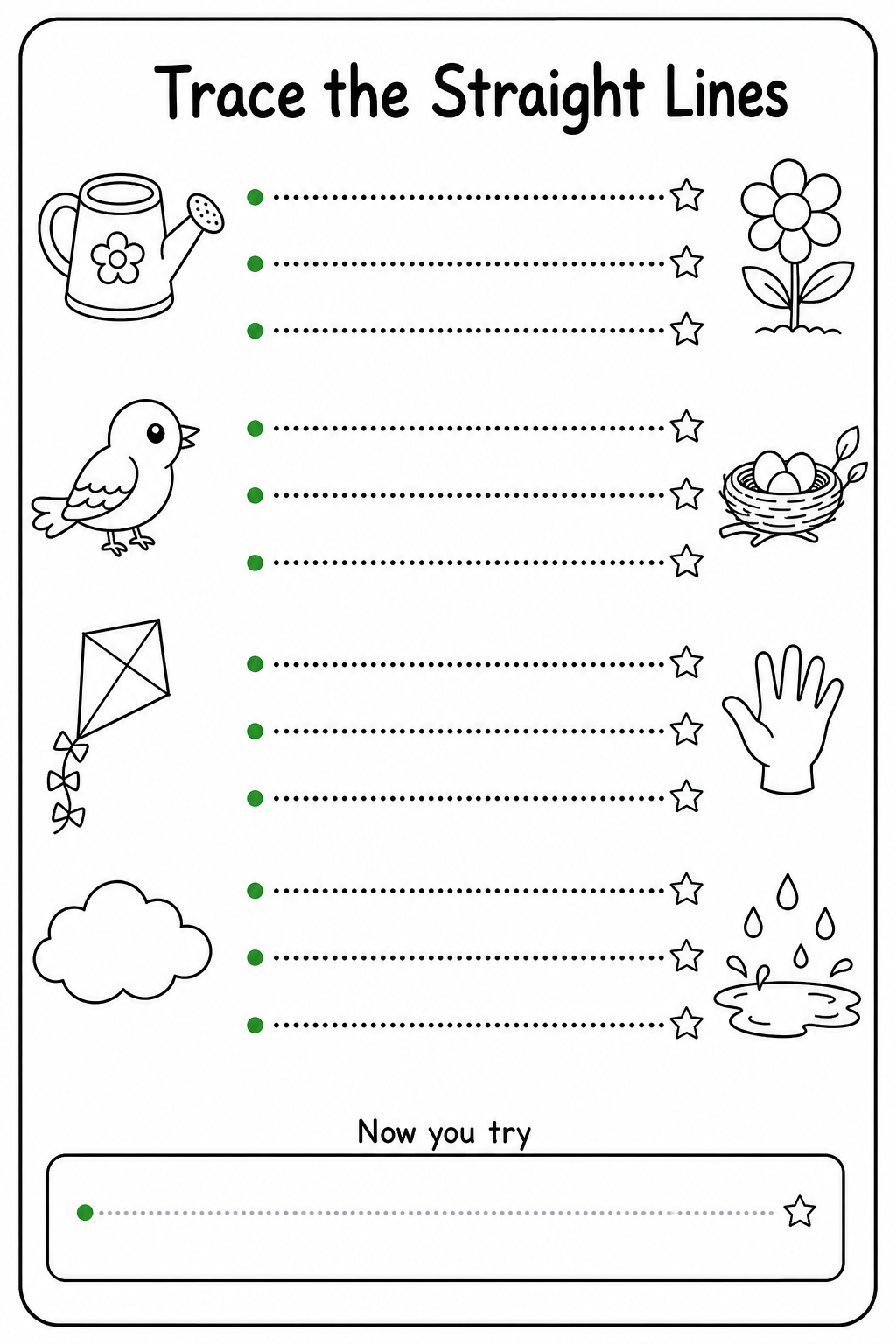 ⭐
Pencil Control Worksheets for Kids: Lines and Curves📄 Printable Worksheets · Age 3-4
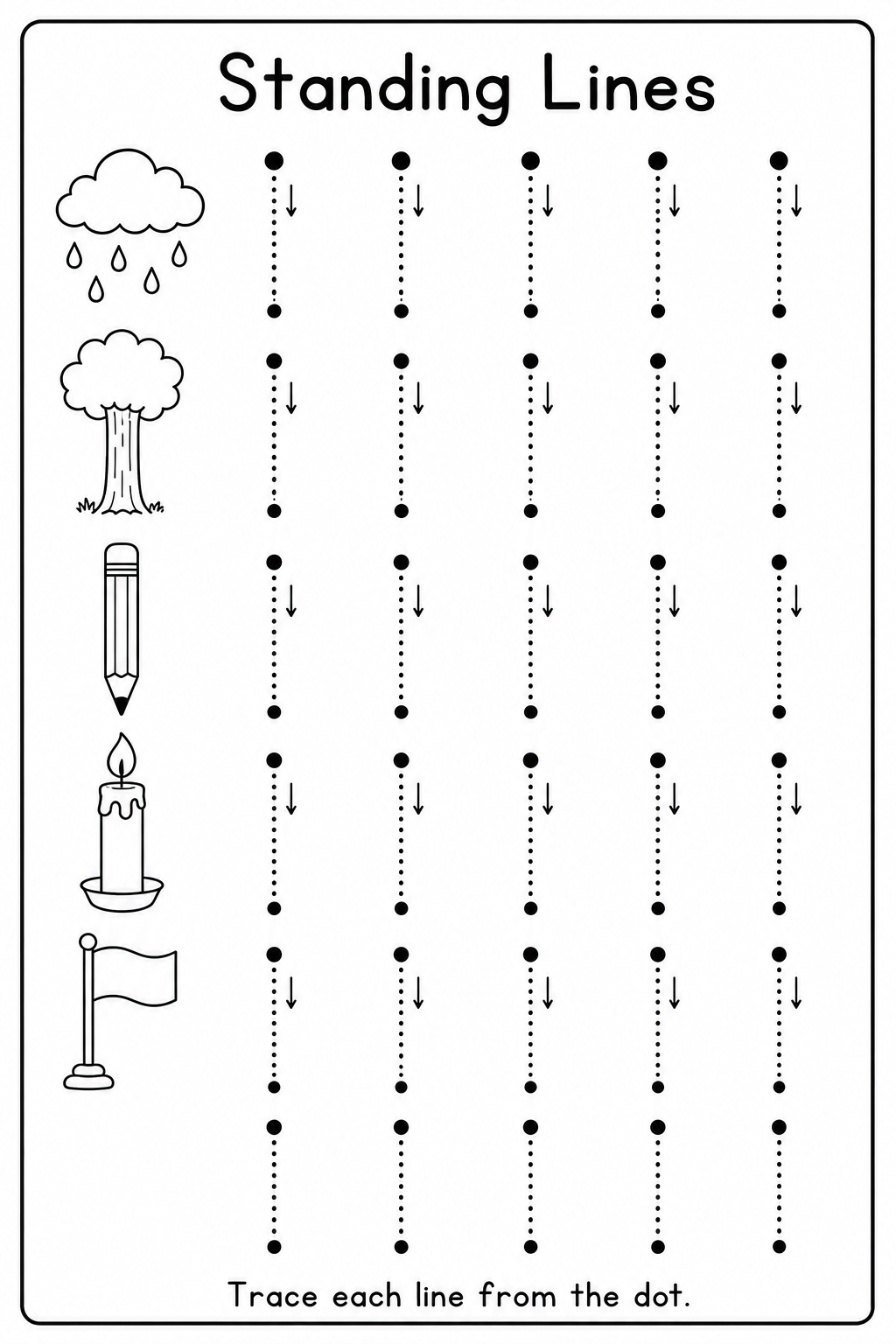 ⭐
Pre-Writing Lines Worksheets for Kids: Trace and Draw📄 Printable Worksheets · Age 3-4
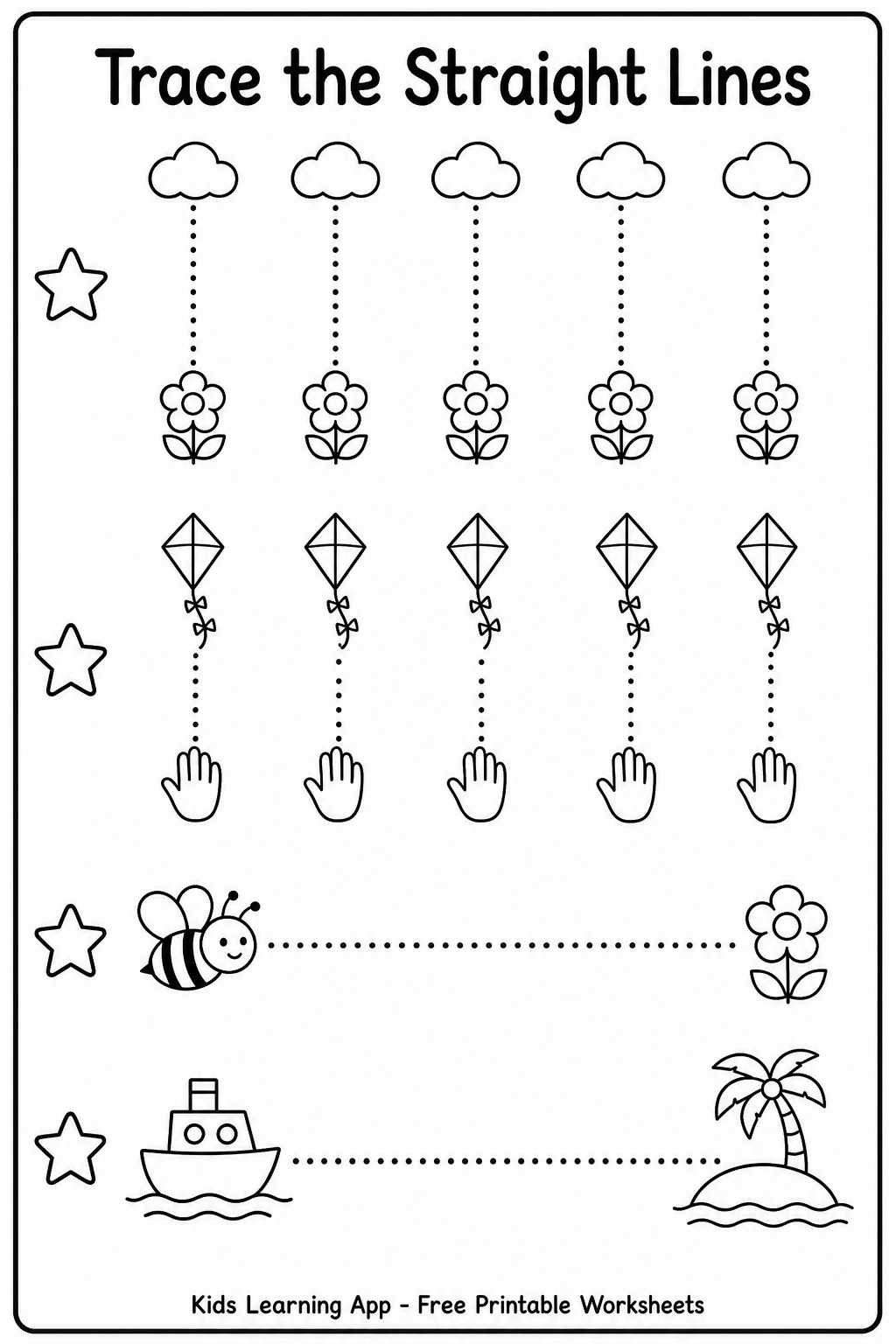 ⭐
Pre-Writing Lines Worksheets for Kids: Trace and Draw📄 Printable Worksheets · Age 3-4
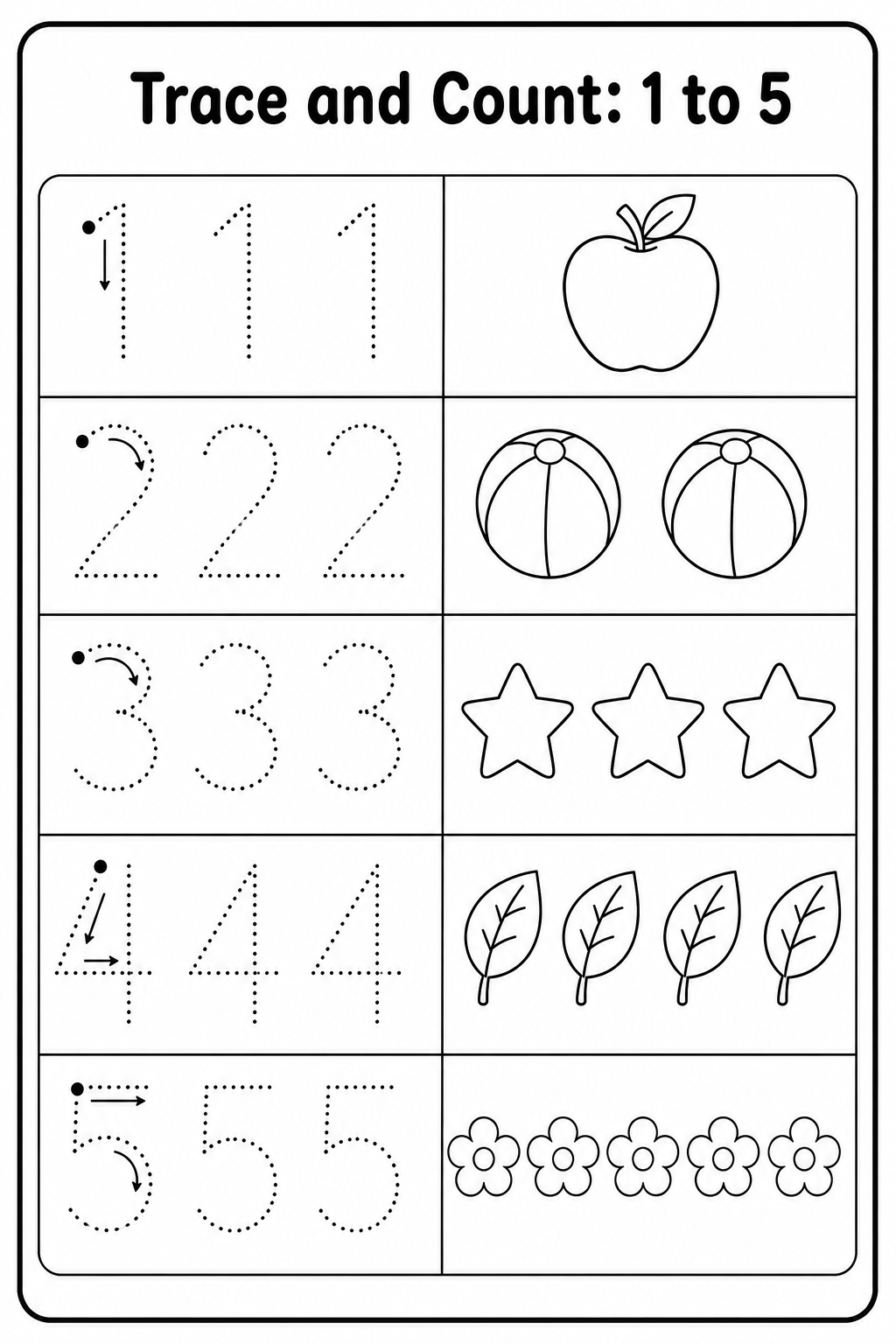 ⭐
Count and Trace Numbers 1-20 Worksheets for Kids📄 Printable Worksheets · Age 4-5
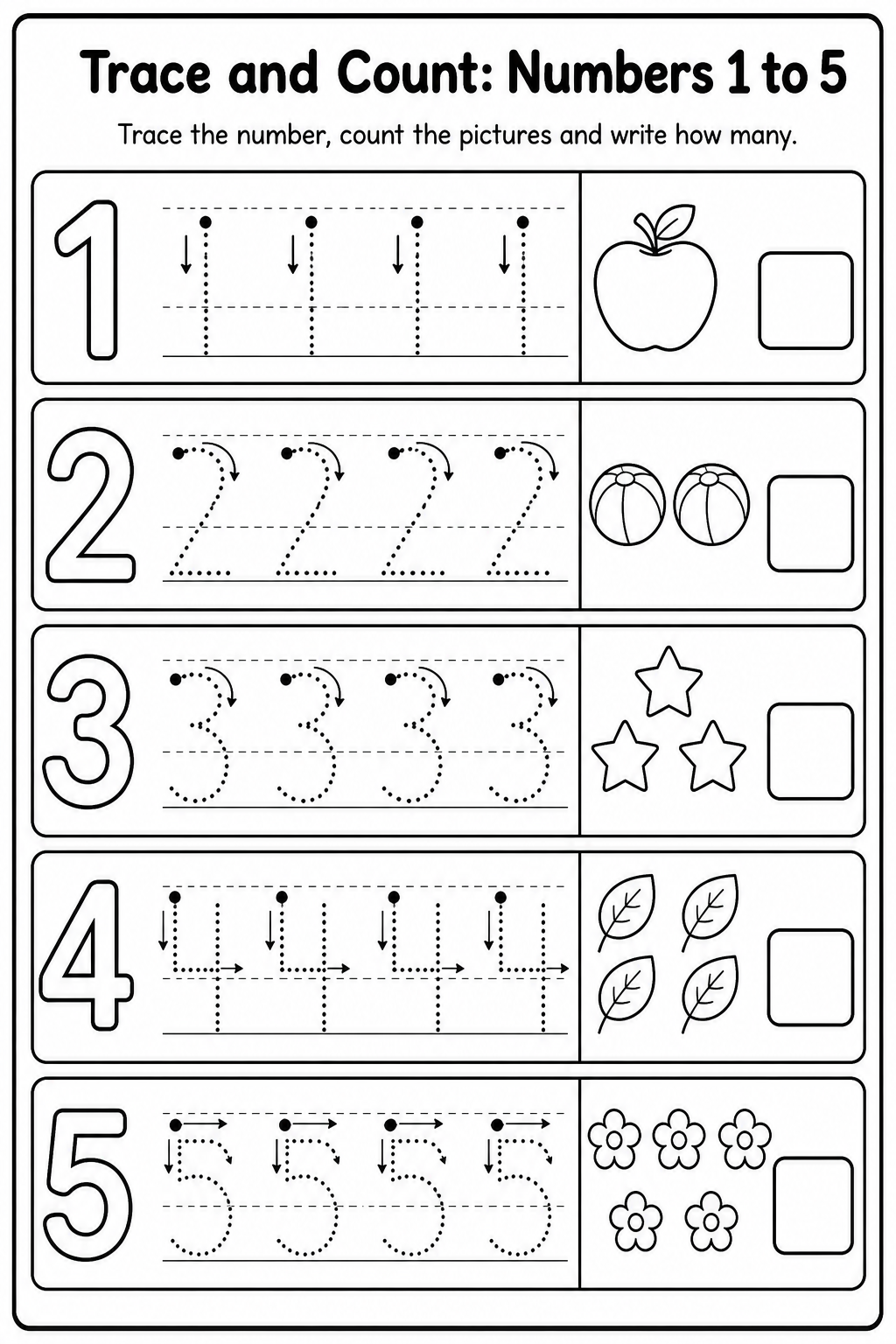 ⭐
Numbers 1 to 20 Worksheets for Kids: Trace and Count📄 Printable Worksheets · Age 4-5
 ⭐
Number Tracing 1 to 20 Worksheets for Kids📄 Printable Worksheets · Age 4-5
More Handwriting activities
Updated 17 Nov 2026