Pencil Control Worksheets for Kids: Trace Lines and Curves
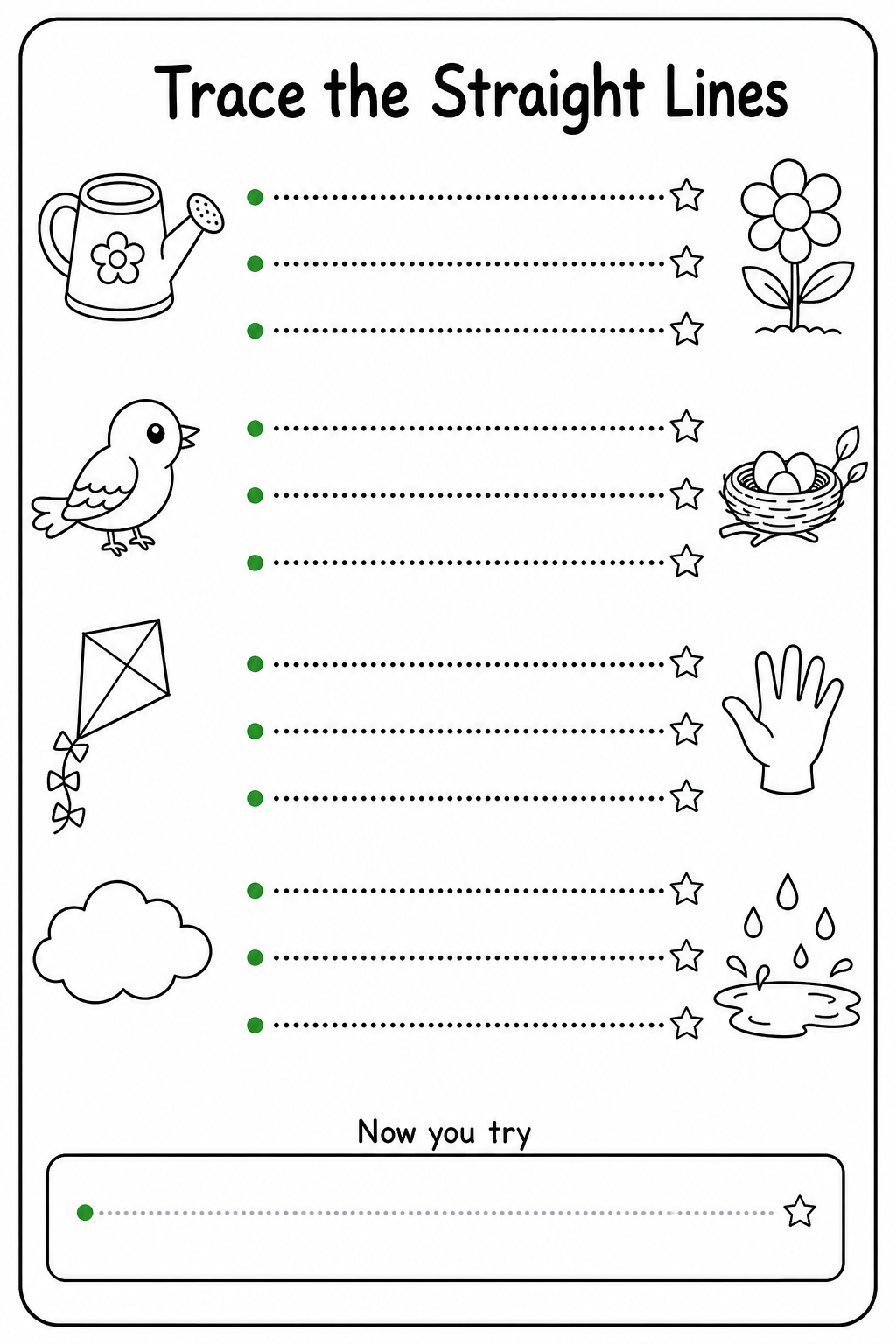
Before children write letters and numbers, their little fingers need practice holding a pencil and moving it with control. These free printable worksheets give young learners simple line paths to follow: straight lines, slanting lines, gentle curves, zigzags and loops.
Each page has large, friendly dotted paths with a clear start dot, so children know exactly where to begin. The pictures are simple and cheerful, such as paths to a flower or waves in the sea, which keeps tracing fun rather than tiring.
Print the pages at home or in class, and let your child trace, colour and try again as many times as they like.
How to play
- Download the free PDF and print the pages on A4 paper. Printing one page a day works well for little hands.
- Show your child the green start dot. Ask them to place the pencil there and slowly follow the dotted path to the end.
- Let them trace each line two or three times, then colour the small picture at the end of the path.
- Finish with the blank practice box, where your child draws the same kind of line on their own.
Pre-writing strokes are the building blocks of handwriting. Every letter and number is made from straight lines, slanting lines, curves and circles, so practising these shapes first makes writing much easier later. While tracing, your child strengthens finger muscles, improves pencil grip and develops hand-eye coordination. Following a path from a start dot to an end point also builds left-to-right directionality, the same movement used in reading and writing. Keep sessions short and relaxed, about ten minutes, and praise effort rather than neatness. Thick crayons or triangular pencils help beginners. Repeating the same page a few times is perfectly good practice.
Frequently asked questions
What age are pre-writing line worksheets best for?
Are these handwriting worksheets free to print?
Why should my child trace lines before writing letters?
How long should a practice session last?
What pencil or crayon should my child use?
More printable worksheets
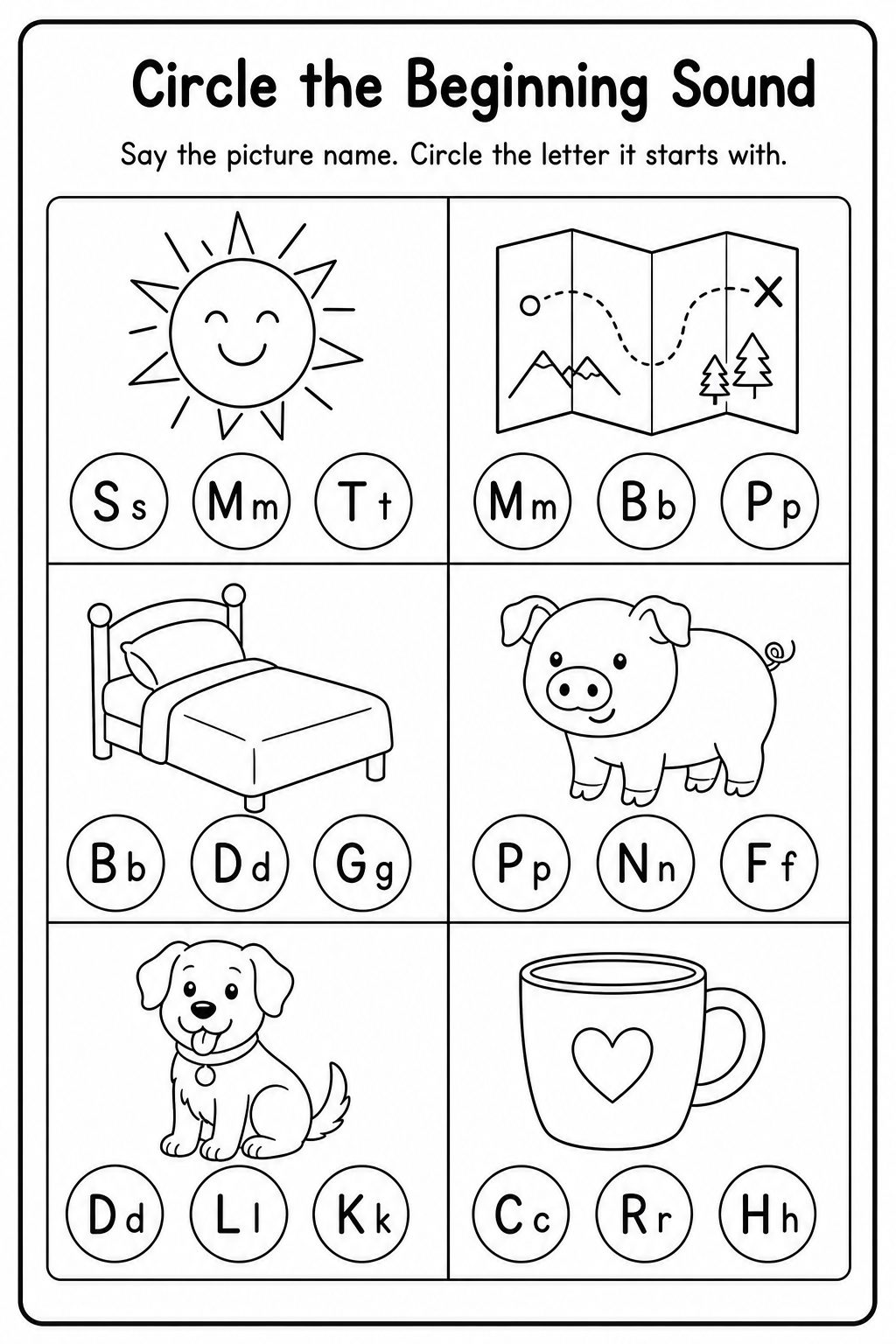 ⭐
Phonics Worksheets for Kids: CVC and Sight Words📄 Printable Worksheets · Age 5-6
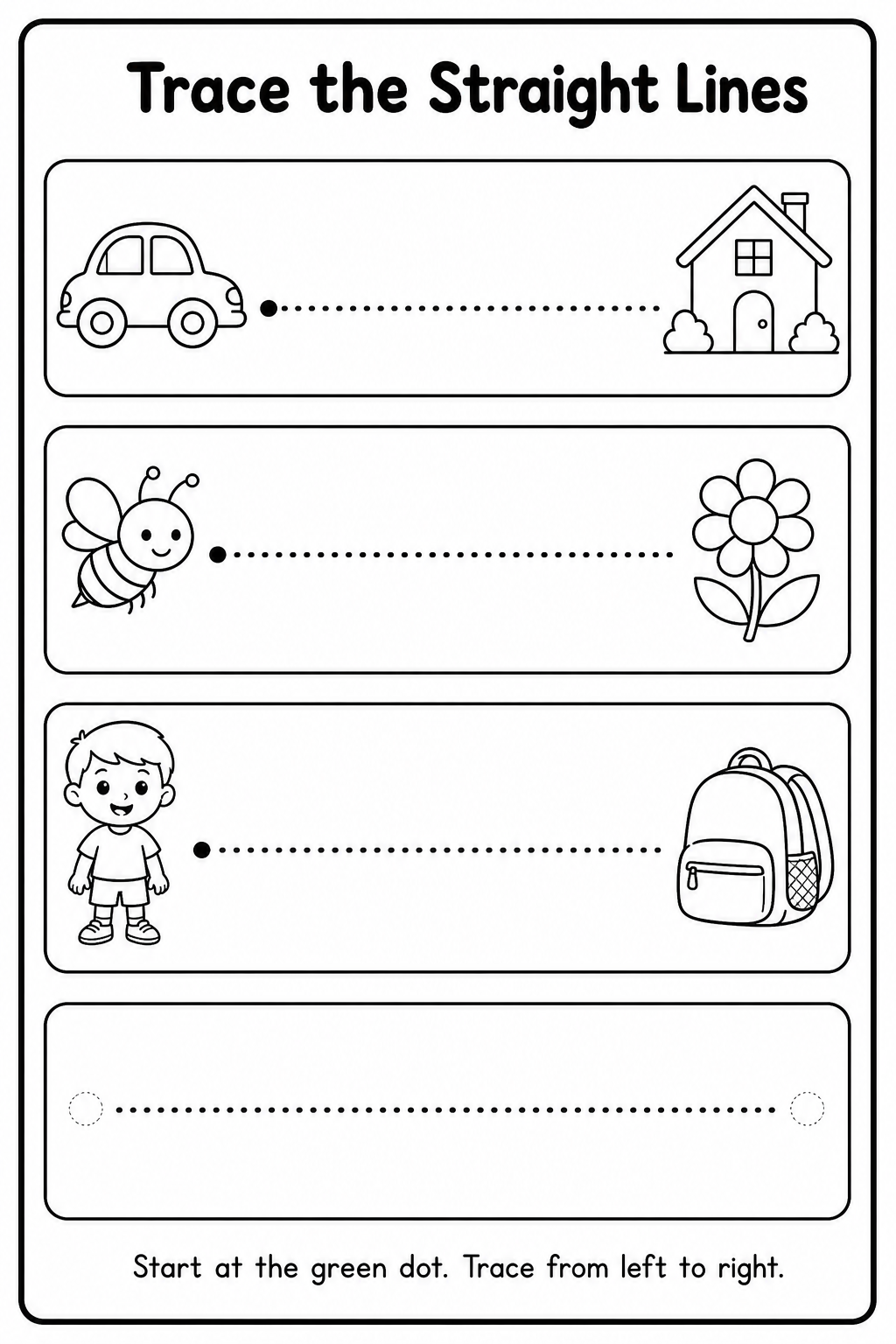 ⭐
Pencil Control Worksheets for Kids: Lines and Curves📄 Printable Worksheets · Age 3-4
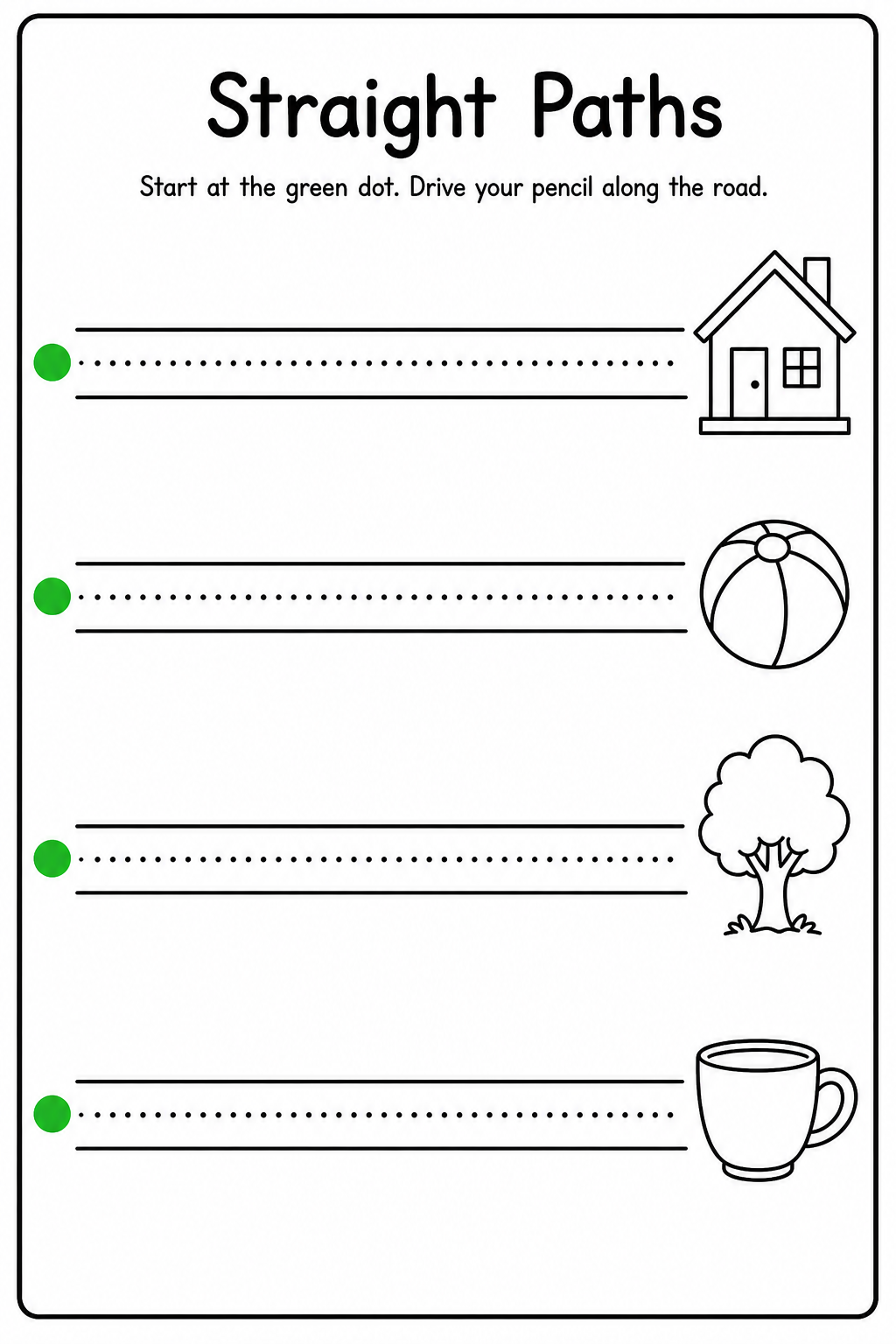 ⭐
Pencil Control Worksheets for Kids: Paths and Curves📄 Printable Worksheets · Age 3-4
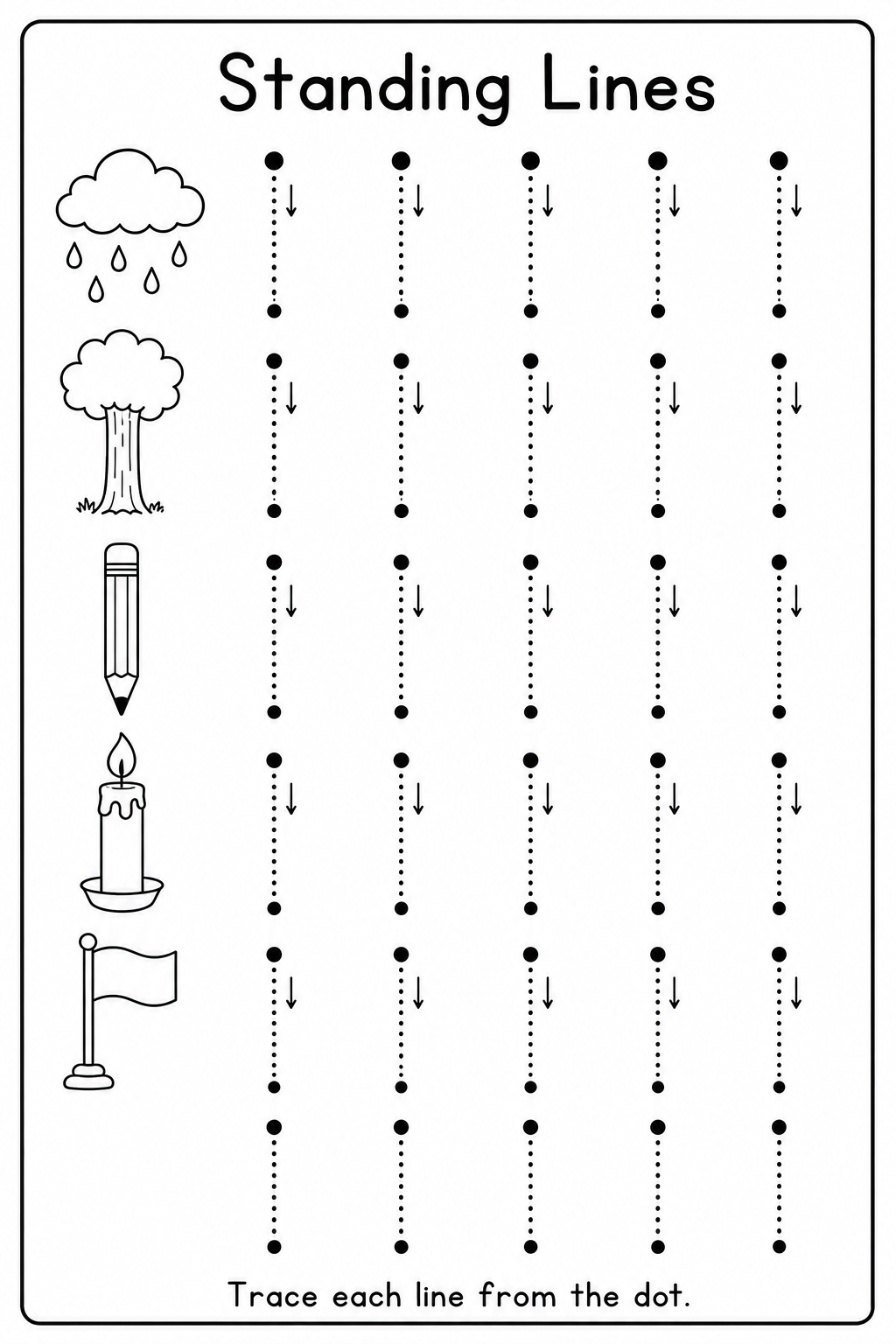 ⭐
Pre-Writing Lines Worksheets for Kids: Trace and Draw📄 Printable Worksheets · Age 3-4
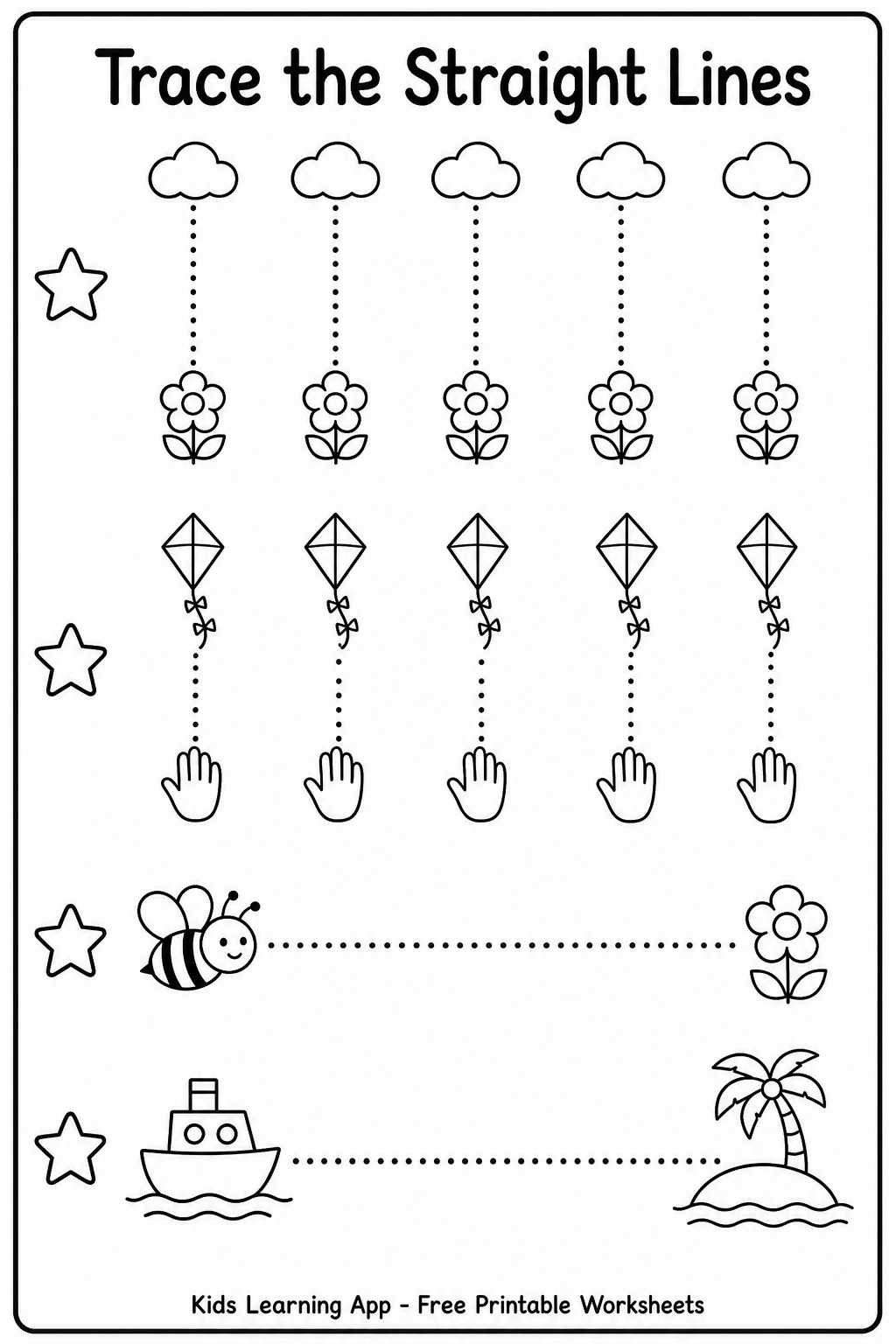 ⭐
Pre-Writing Lines Worksheets for Kids: Trace and Draw📄 Printable Worksheets · Age 3-4
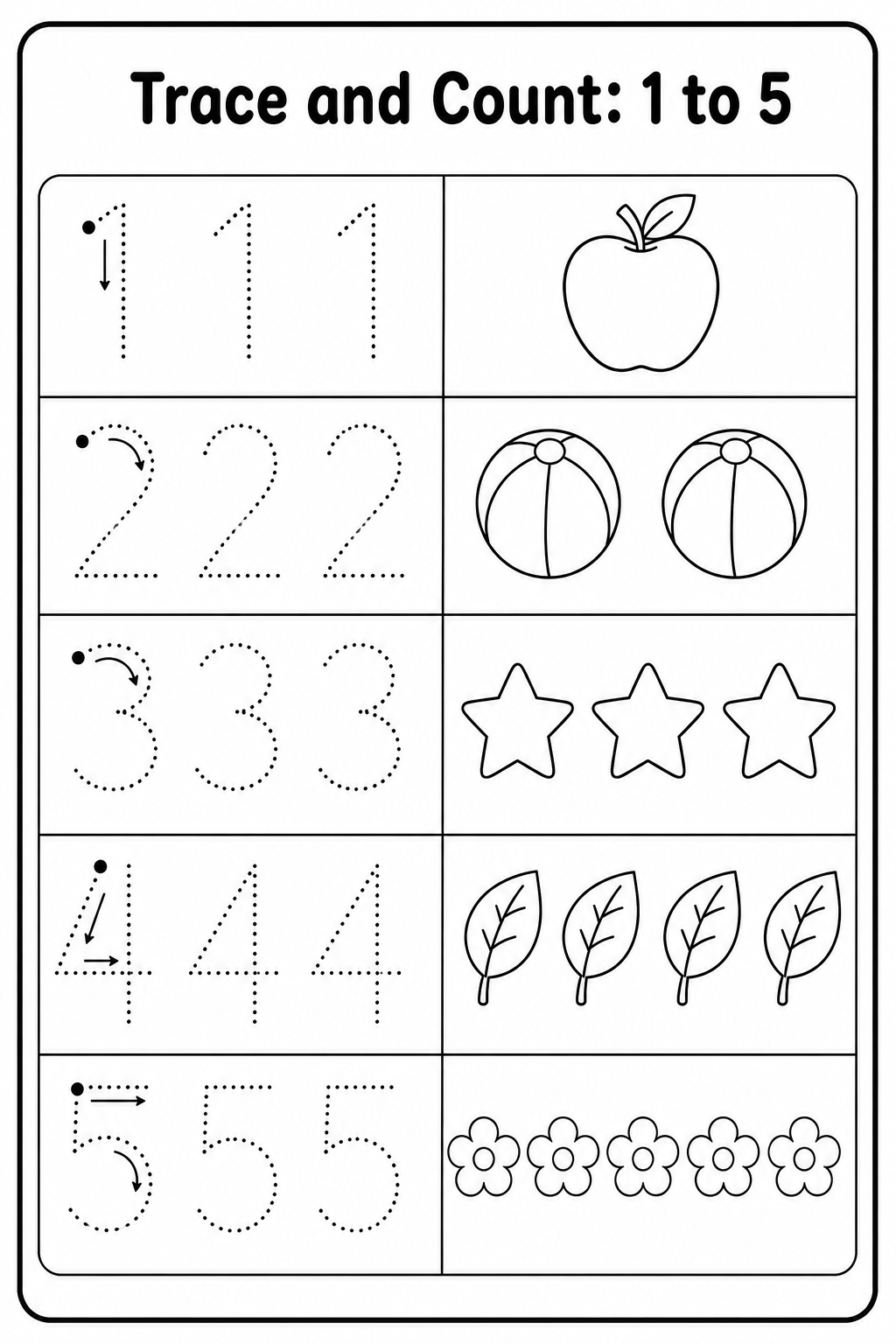 ⭐
Count and Trace Numbers 1-20 Worksheets for Kids📄 Printable Worksheets · Age 4-5
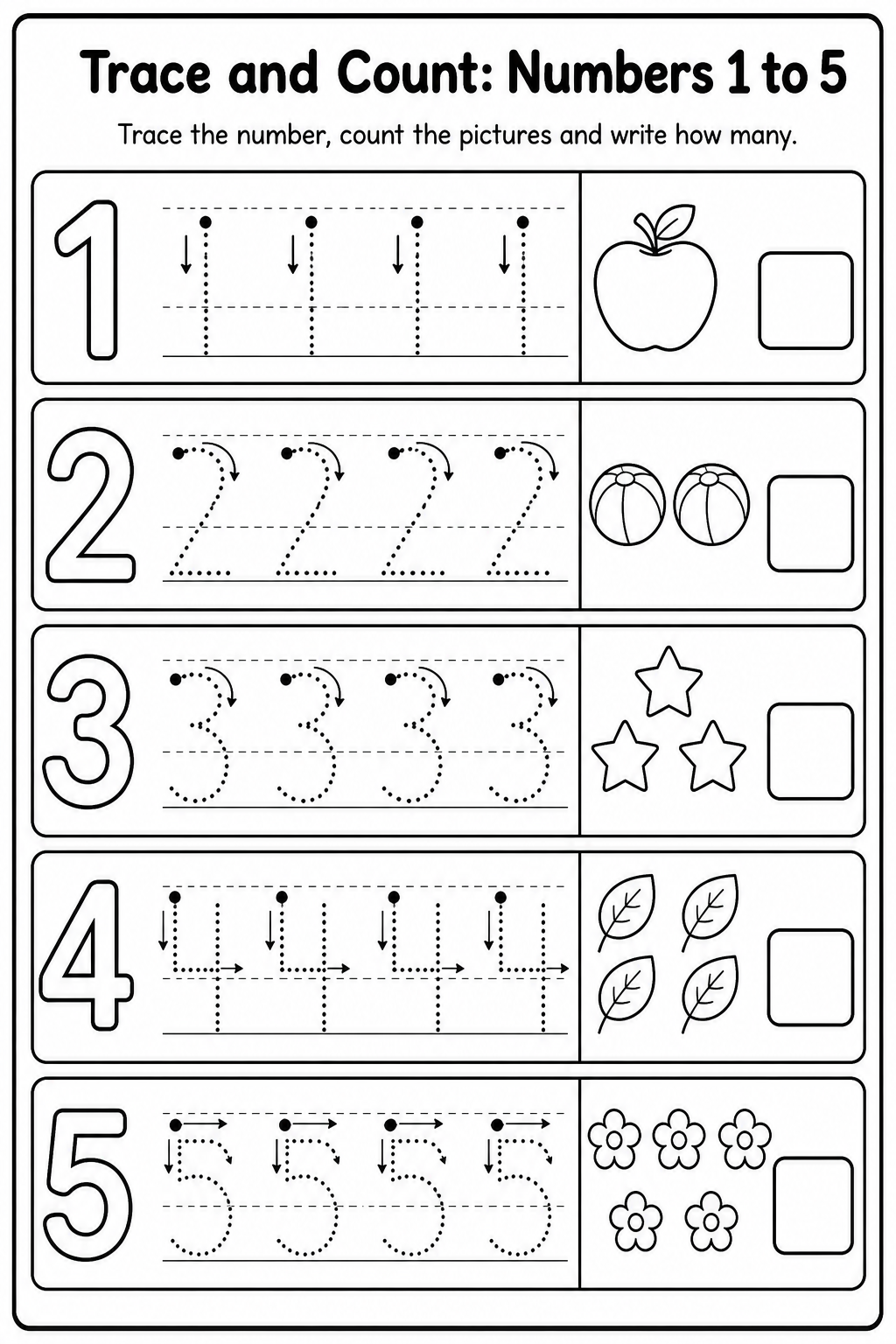 ⭐
Numbers 1 to 20 Worksheets for Kids: Trace and Count📄 Printable Worksheets · Age 4-5
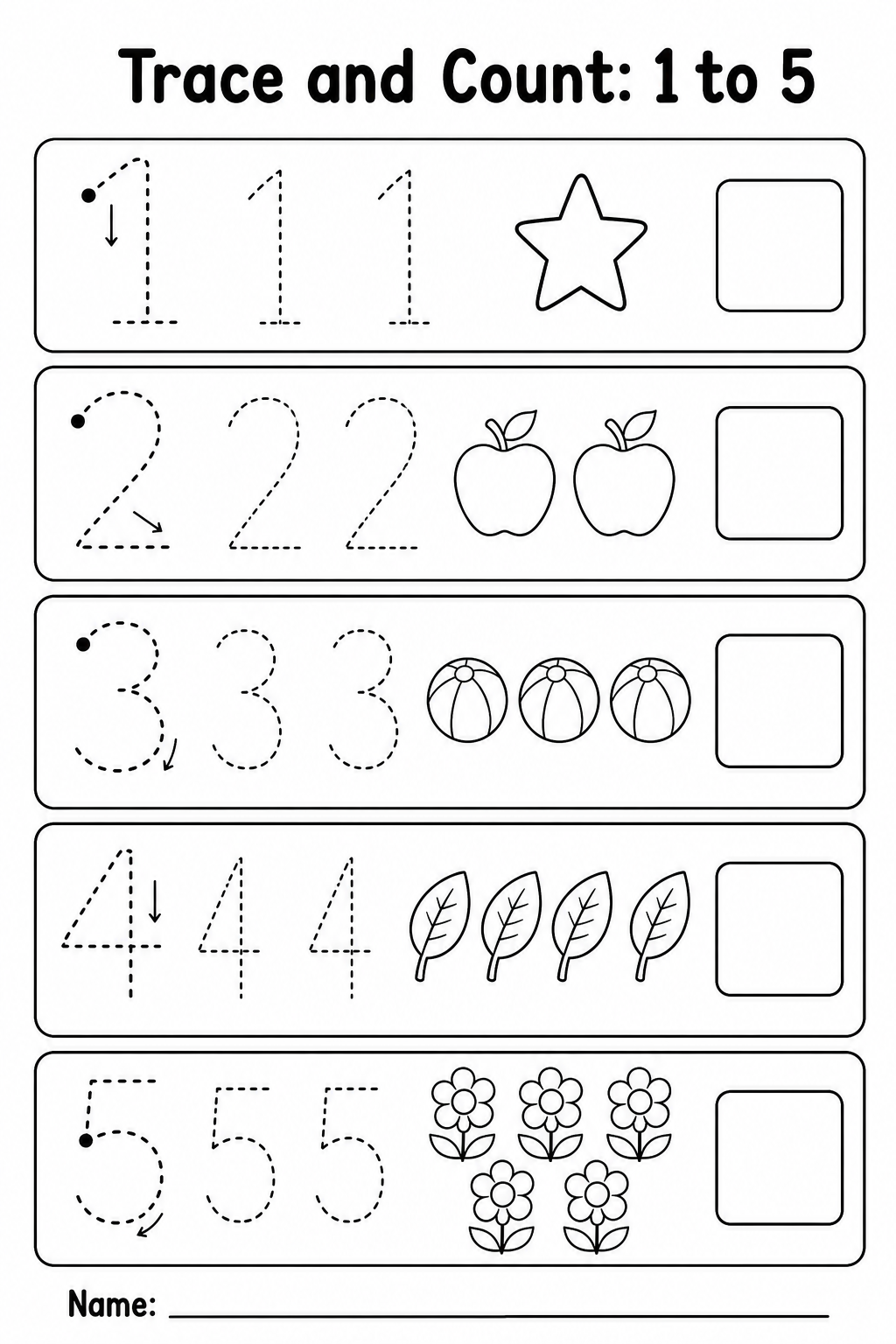 ⭐
Number Tracing 1 to 20 Worksheets for Kids📄 Printable Worksheets · Age 4-5
More Handwriting activities
Updated 17 Nov 2026