Pencil Control Worksheets for Kids: Lines and Curves
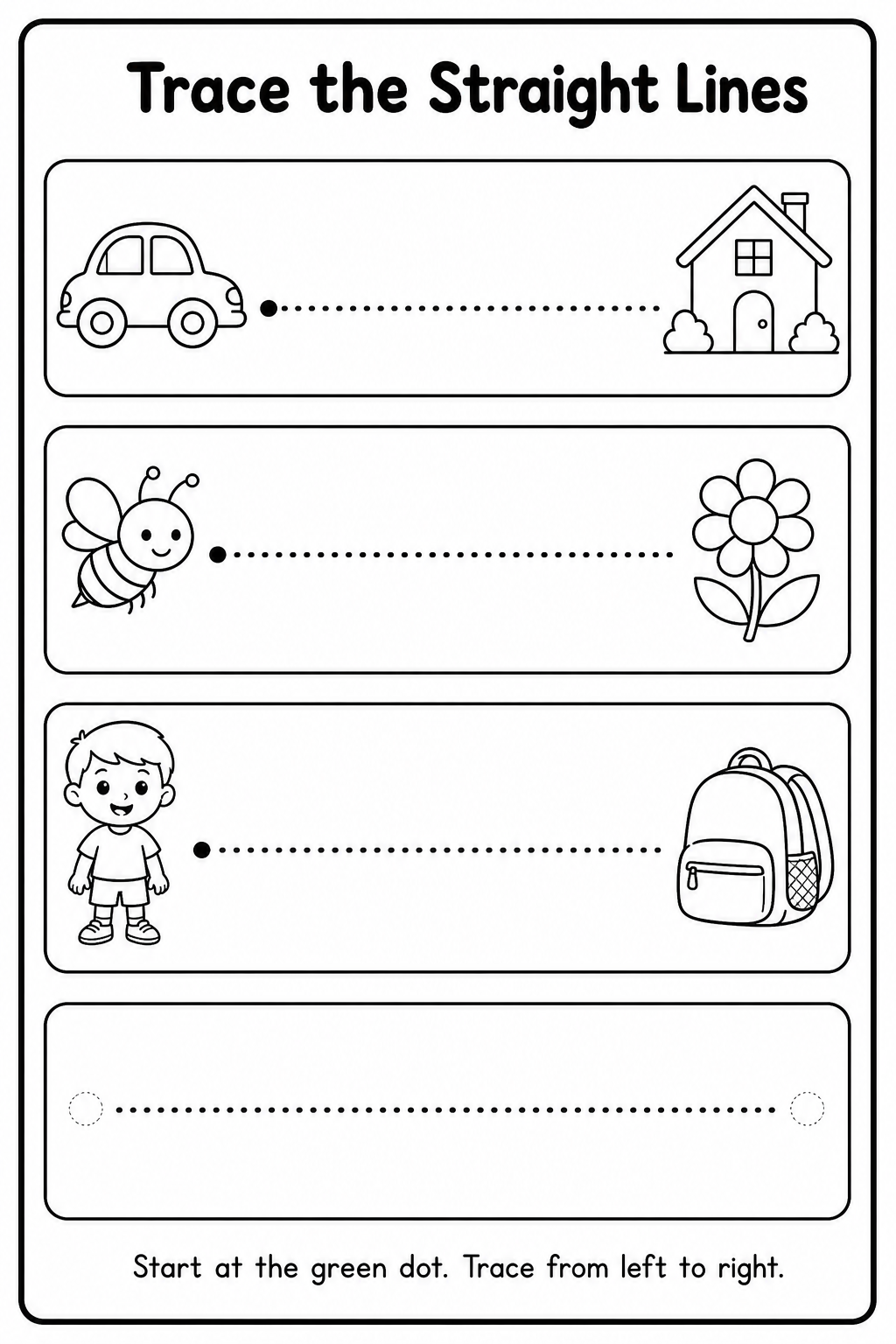
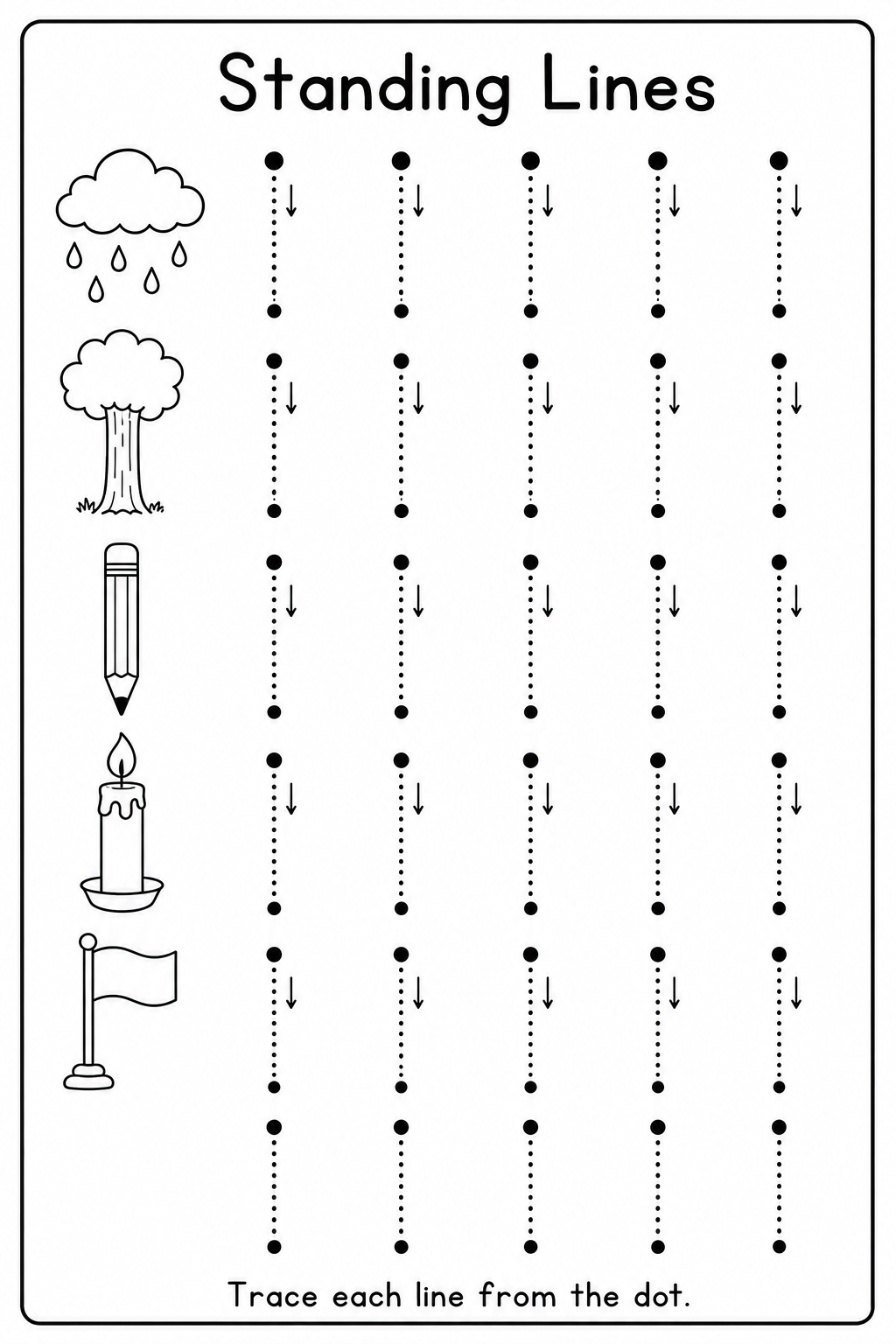
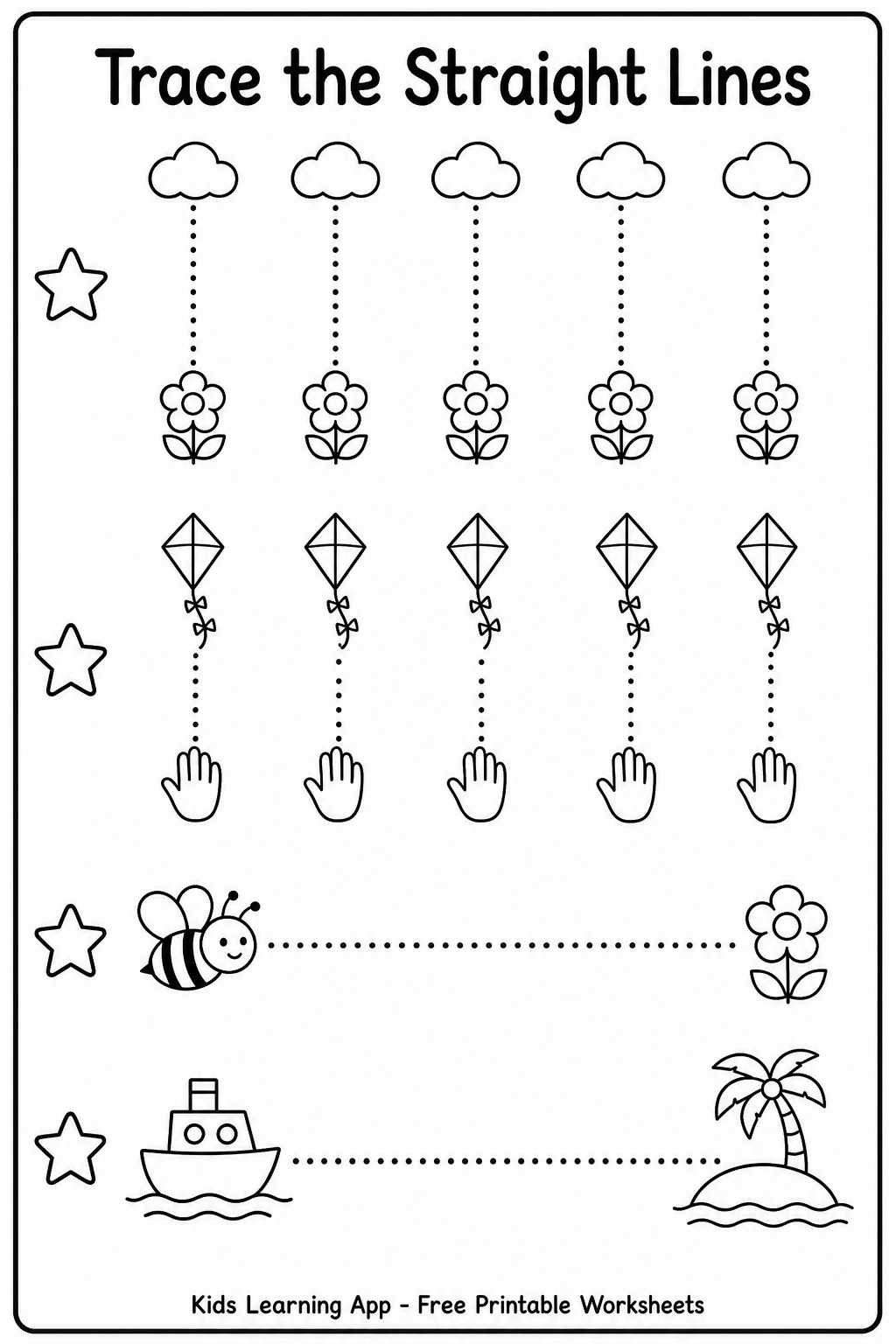
Before a child can write letters, the hand needs practice holding a pencil and moving it in a steady way. These free printable pencil control worksheets for kids give that practice in a fun, gentle way. Children trace straight lines, standing and sleeping lines, slanting lines, zigzags, curves, loops and spirals, each one leading a friendly picture to its happy ending.
The pages start easy and get a little longer as you go. They are perfect for preschool, nursery and kindergarten children at home or in class. Print as many copies as you like and practise a page a day.
How to play
- Print the worksheet pages on A4 paper. One page a day is enough for little hands.
- Help your child hold the pencil or crayon with three fingers and sit comfortably with both feet on the floor.
- Start at the big green dot and trace along each dotted path, going slowly to the picture at the end.
- Colour the pictures afterwards, then try drawing the same lines freehand in the empty practice boxes.
Pre-writing lines are the building blocks of handwriting. Every letter and number is made from standing lines, sleeping lines, slanting lines and curves, so the more comfortable your child is with these shapes, the easier letter formation becomes later. While tracing, children strengthen the small muscles of the hand, improve hand-eye coordination and learn to control pressure and direction. They also practise working from left to right and from top to bottom, the same way we read and write. Keep sessions short and cheerful, about ten minutes, and praise effort rather than neatness. Fat crayons and chalk on a slate are great for extra practice.
Frequently asked questions
What age are pre-writing line worksheets suitable for?
How should my child hold the pencil?
How often should we practise?
Are these worksheets free to print?
My child goes outside the lines. Is that a problem?
More printable worksheets
 ⭐
Phonics Worksheets for Kids: CVC and Sight Words📄 Printable Worksheets · Age 5-6
 ⭐
Pencil Control Worksheets for Kids: Lines and Curves📄 Printable Worksheets · Age 3-4
 ⭐
Pencil Control Worksheets for Kids: Paths and Curves📄 Printable Worksheets · Age 3-4
 ⭐
Pre-Writing Lines Worksheets for Kids: Trace and Draw📄 Printable Worksheets · Age 3-4
 ⭐
Pre-Writing Lines Worksheets for Kids: Trace and Draw📄 Printable Worksheets · Age 3-4
 ⭐
Count and Trace Numbers 1-20 Worksheets for Kids📄 Printable Worksheets · Age 4-5
 ⭐
Numbers 1 to 20 Worksheets for Kids: Trace and Count📄 Printable Worksheets · Age 4-5
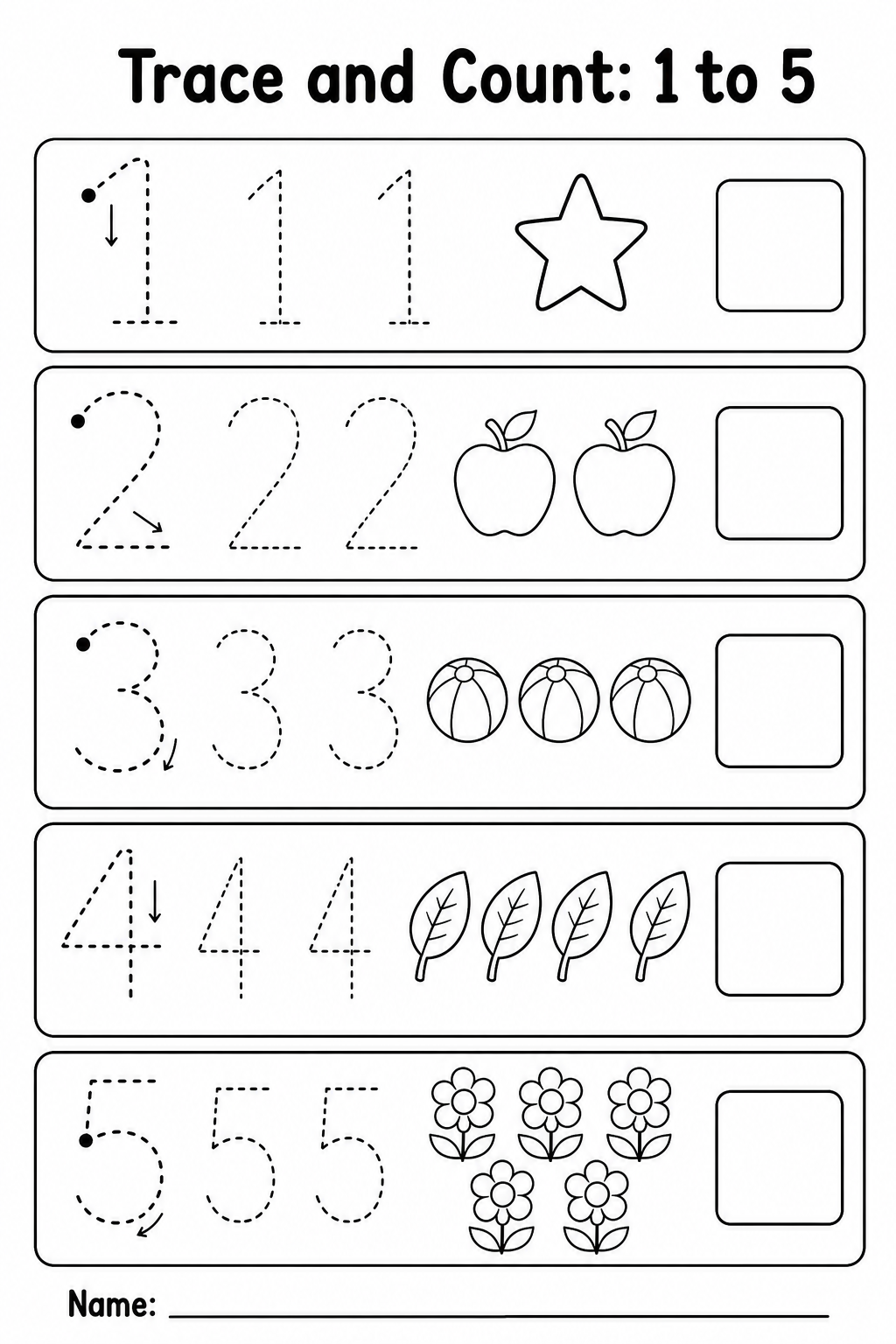 ⭐
Number Tracing 1 to 20 Worksheets for Kids📄 Printable Worksheets · Age 4-5
More Handwriting activities
Updated 17 Nov 2026