🎶 Nursery Rhymes for Kids with Read-Along Stories
Nursery rhymes for kids are one of the easiest ways to bring words, music and pictures together. On this page your child can listen or watch a rhyme, follow the highlighted words and sing along at their own speed. Every read-along rhyme works on a phone, tablet or computer, and each one can also be printed as a worksheet for quiet time, homework or classroom story time. All activities are completely free, with no login needed, so you can start singing straight away.
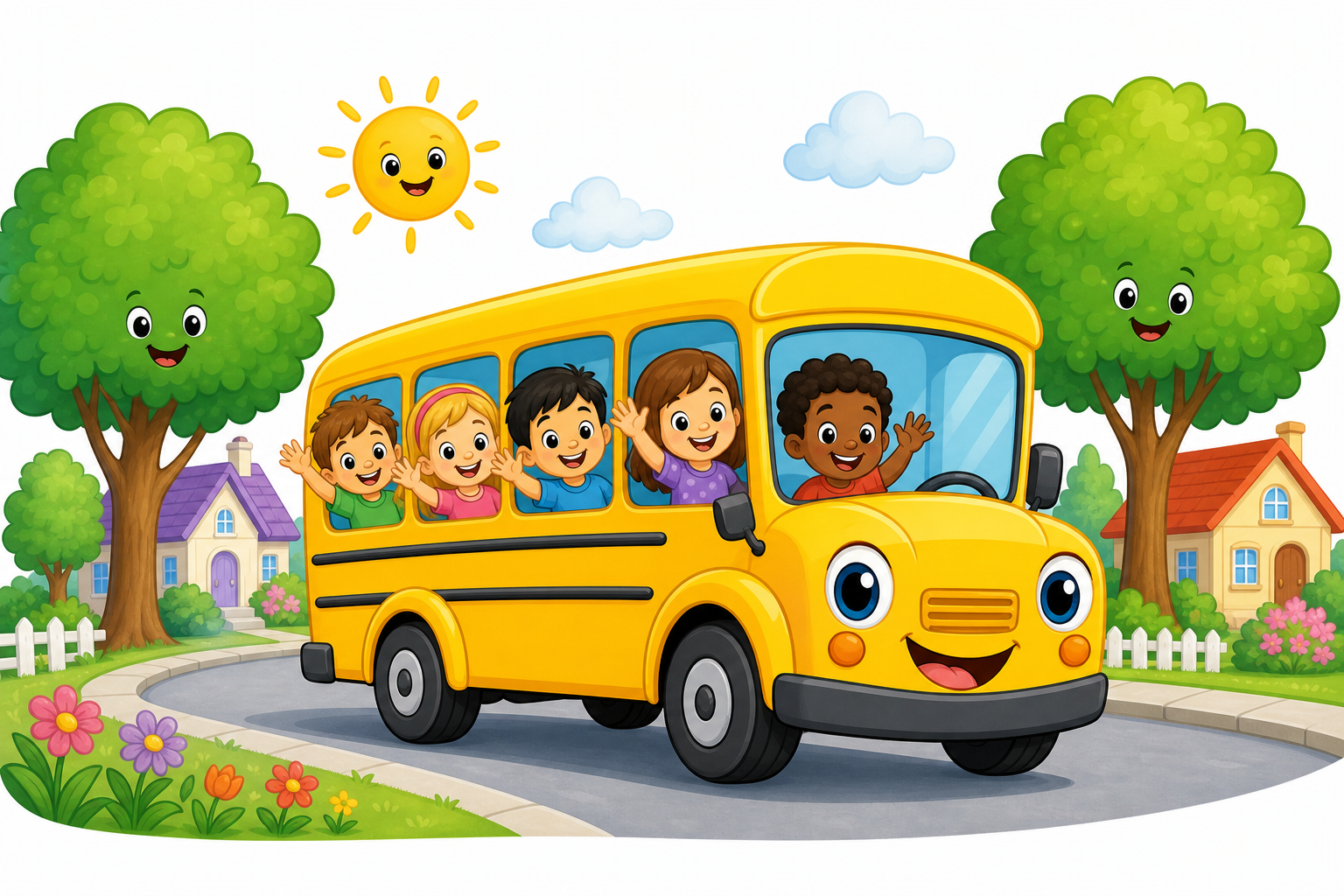 ⭐
The Wheels on the Bus Read-Along Rhyme for Kids🎶 Rhymes and Stories · Age 3-4
🎶⭐
Twinkle Twinkle Little Star (Read-Along)🎶 Rhymes and Stories · Age 2-3
What these rhymes and stories are
This collection brings together simple read-along rhymes that children already love to hear at home and in school. Each activity shows the rhyme line by line with friendly pictures, so your child can watch, listen and follow the words at the same time. Children can play Twinkle Twinkle Little Star (Read-Along) and The Wheels on the Bus Read-Along Rhyme for Kids as many times as they like. Repetition is not boring for young children. It is exactly how they learn new sounds, new words and the rhythm of language.
Because the words appear along with the sound, children slowly start to connect what they hear with what they see on the page. That is the very first step towards reading, long before formal lessons begin.
Skills children build with read-along rhymes
- Listening skills: children learn to pay attention to a full rhyme from start to finish.
- Vocabulary: words like star, sky, wheels, bus, round and open become part of daily talk.
- Phonological awareness: hearing rhyming pairs such as star and are, or wipers and diapers, trains the ear for sounds.
- Print awareness: following words from left to right builds early reading habits.
- Memory and sequencing: remembering which verse comes next strengthens recall.
- Speech and confidence: singing out loud helps shy children practise clear speaking in a happy, pressure-free way.
- Fine motor skills: the printed worksheets add colouring, tracing and matching practice.
How to play online and how to print
Tap any rhyme to open it. Your child can listen or watch, pause whenever needed and repeat a favourite line. There are no scores and no time limits, so children stay relaxed. The pages work on small phone screens as well as on big classroom displays.
To print, use the print option on the activity page and choose plain A4 paper. Printed sheets are useful when you want screen-free time, a travel activity or a take-home page for a class. Many teachers print a set, staple them into a small rhyme booklet and let each child decorate the cover. Children then read their own book to family members, which is a lovely confidence boost.
Ideas by age
Ages 2 to 3: sit with your child, play the rhyme and do the actions together. Open and close your hands for the wipers, make a twinkling motion with your fingers. Do not expect your toddler to read; the goal is joyful listening and copying sounds.
Ages 4 to 5: point to each word as it is sung. Pause before the last word of a line and let your child shout it out. Ask simple questions: what colour is the bus, where do we see stars? Then print the sheet and colour it together.
Ages 6 to 8: ask children to read the rhyme on their own, then find the rhyming pairs and circle them on the printed page. Older children can write one new verse of their own, for example about the horn on the bus or a cloud in the night sky. This turns a rhyme into a first writing task.
Tips for parents and teachers
- Keep sessions short and happy. Ten minutes of singing beats thirty minutes of struggle.
- Use rhymes at fixed times, such as before bed or at the start of a class, so children know what to expect.
- Let children choose the rhyme. Choice makes them far more willing to join in.
- Add simple props: a toy steering wheel, a paper star on a stick, a torch for night-sky fun.
- Link rhymes to other learning. After the bus rhyme, talk about vehicles and journeys; after the star rhyme, talk about day and night.
- Praise effort, not perfect pronunciation. Confidence comes first.
More activities your child will enjoy
Once your child enjoys singing along, keep the same words moving into other kinds of play. Try animal sounds for kids to practise listening in a new way, build everyday vocabulary with our picture dictionary for kids, or test what they remember with a gentle picture quiz for kids. Mixing songs, pictures and simple quizzes keeps early learning varied and fun, and every activity on the site stays free to play online and free to print.