🔍 Spot the Difference for Kids: Free Printable Picture Puzzles
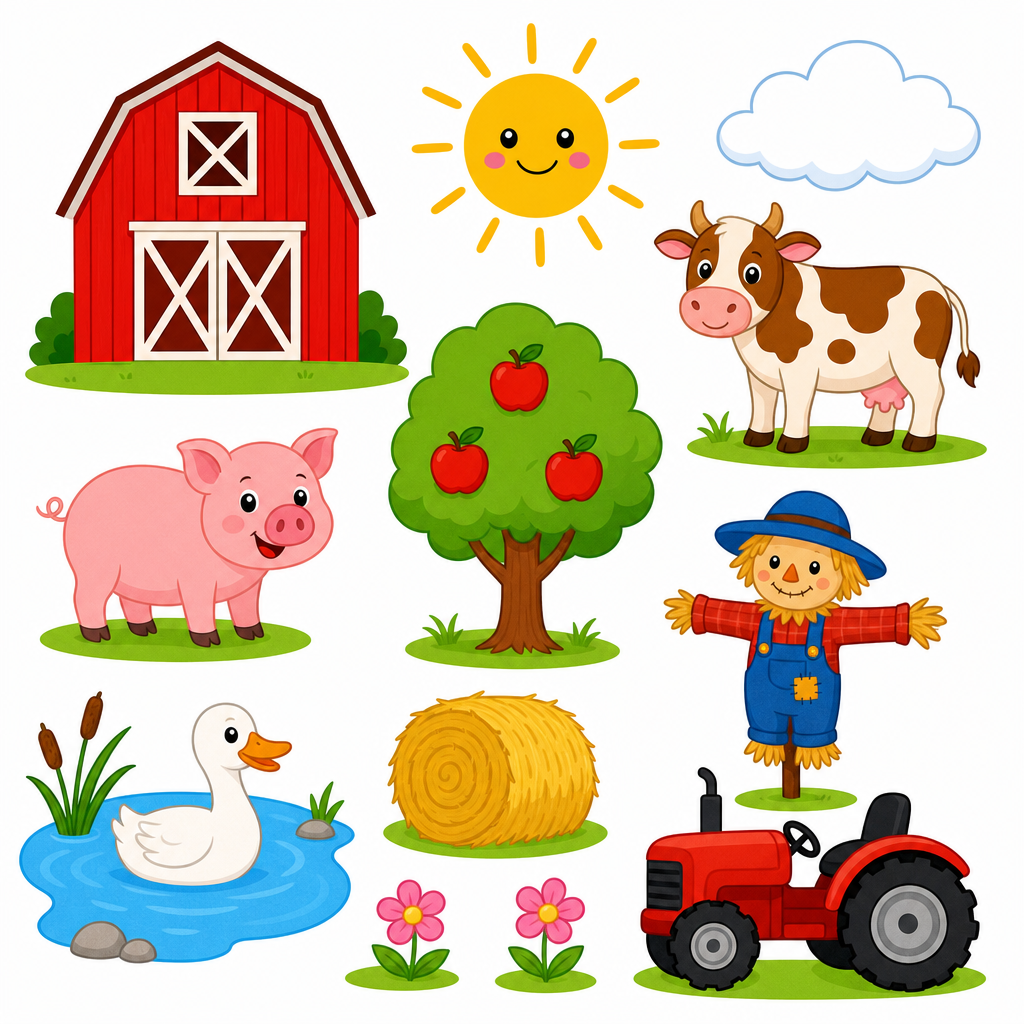
Spot the difference for kids turns careful looking into a happy little game. Two pictures sit side by side, and your child hunts for the small changes hiding between them. Every puzzle here can be played online on a phone, tablet or computer, or printed as a clean black-and-white worksheet for quiet table time. The scenes are gentle and friendly, with cheerful farm animals and simple shapes that young children recognise. Pick a puzzle below, start looking closely, and enjoy the cheer when the last difference is found.
 ⭐
What are spot the difference activities?
A spot the difference puzzle shows two almost identical pictures. One of them has a few small changes: a missing spot on a cow, a different colour on a barn door, an extra flower in the grass. The child's job is to compare the two pictures and find every change. Nothing is hidden by tricks or speed, so there is no pressure. These find the difference pictures for kids work like a slow, friendly treasure hunt for the eyes, and children can take as long as they like. The farm animal puzzle on this page is a gentle starting point for preschoolers and early primary learners.
Skills children learn
Looking closely is a real skill, and it supports both reading and maths later on. Regular picture puzzles help children with:
- Visual discrimination - noticing that b and d, or 6 and 9, are not the same shape.
- Attention and focus - staying with one task until it is finished.
- Working memory - holding one picture in mind while scanning the other.
- Vocabulary - naming animals, colours, positions and sizes out loud.
- Patience and persistence - learning that the last difference is worth the extra look.
- Pencil control - circling each difference neatly on the printed worksheet.
How to play online and print the worksheet
Open any activity and the two pictures appear side by side or one above the other, depending on your screen. Your child taps or clicks on a spot where the pictures differ. Correct finds are marked, so there is no confusion about what has already been located. The puzzle works with a finger on a tablet, a touchscreen phone or a mouse on a computer.
Prefer paper? Use the print option to get a tidy spot the difference worksheet in black and white. Printed sheets are ideal for classrooms, long journeys, waiting rooms and screen-free afternoons. Children circle each difference with a pencil or crayon, and the same sheet can be printed again for a second try or for a sibling. Everything on this page is free, with no sign-up needed.
Ideas by age
Ages 2-3: Sit together and treat it as a talking game rather than a test. Point to one animal at a time and ask, "Is this cow the same in both pictures?" Toddlers may find only one or two differences, and that is a success. Keep sessions to five minutes.
Ages 4-5: Preschoolers can usually find most differences on their own with light hints such as "look near the barn". Encourage them to describe what changed using full sentences: "The duck has lost its hat." On the printed version, ask them to circle each find so they can count the total at the end.
Ages 6-8: Older children enjoy a friendly challenge. Try a soft timer, ask them to list the differences in writing, or let two children race on separate printed copies. You can also ask them to invent their own puzzle by drawing the same picture twice with small changes.
Tips for parents and teachers
- Start with the full picture, then scan in sections - top to bottom, left to right - instead of jumping around.
- Praise the effort of looking, not only the number found.
- Print two copies for pair work in class; children love comparing notes.
- Use the puzzle as a calm transition activity after active play.
- Stop while your child is still enjoying it, so the next session feels inviting.
- Keep finished sheets in a folder to show progress over the term.
More picture puzzles to try
If your child enjoys looking closely, there is plenty more to explore on the site. Try Odd One Out for quick thinking about categories, build concentration with our memory card flip games, or move on to free jigsaw puzzles for kids when your child is ready to put whole pictures together. Mixing a few of these each week keeps learning fresh, and all of them are free to play online or print at home and in the classroom.