📄 Printable Worksheets for Kids
Printable worksheets for kids make early learning simple, calm and fun at home or in class. On this page you will find free alphabet tracing, number tracing and shapes worksheets that children can complete online on a phone, tablet or computer, or download and print on plain A4 paper. Every sheet is clear, uncluttered and child friendly, so little hands can focus on forming letters, counting and matching shapes. Choose an activity below, press print, and your child is ready to start.
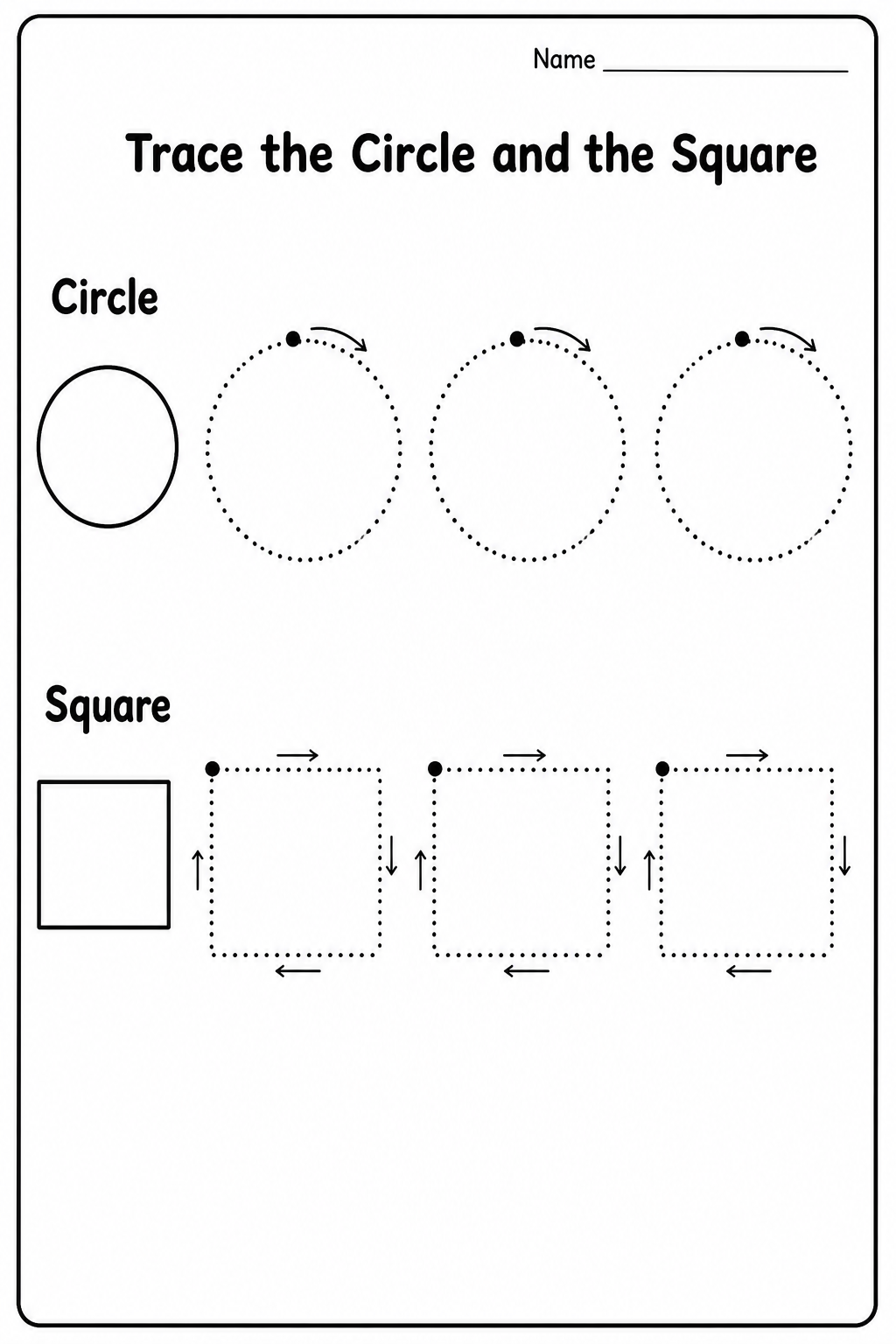 ⭐
Shapes Worksheets for Kids: Trace, Colour and Match📄 Printable Worksheets · Age 3-4
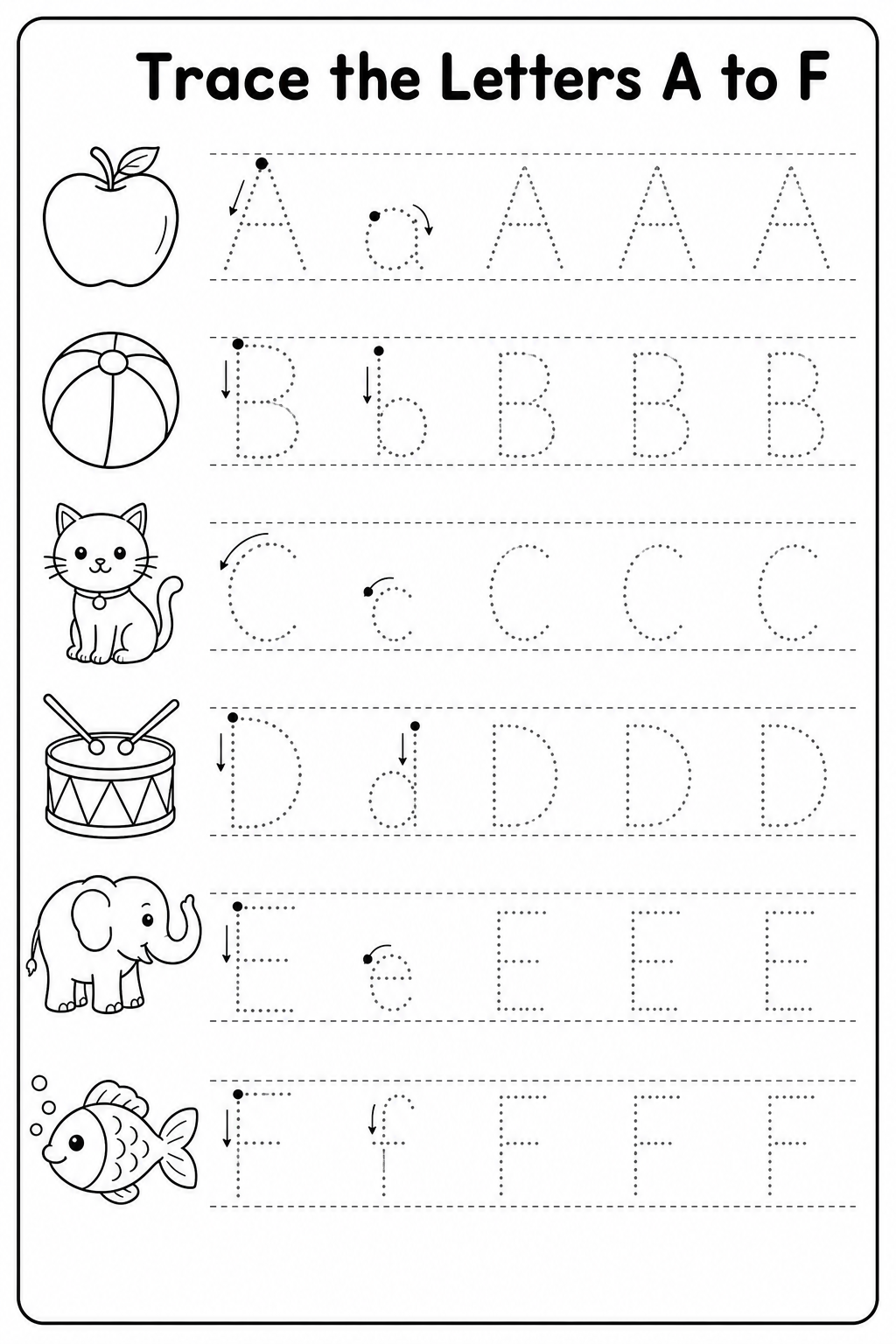 ⭐
Alphabet Tracing A to Z Worksheets for Kids📄 Printable Worksheets · Age 4-5
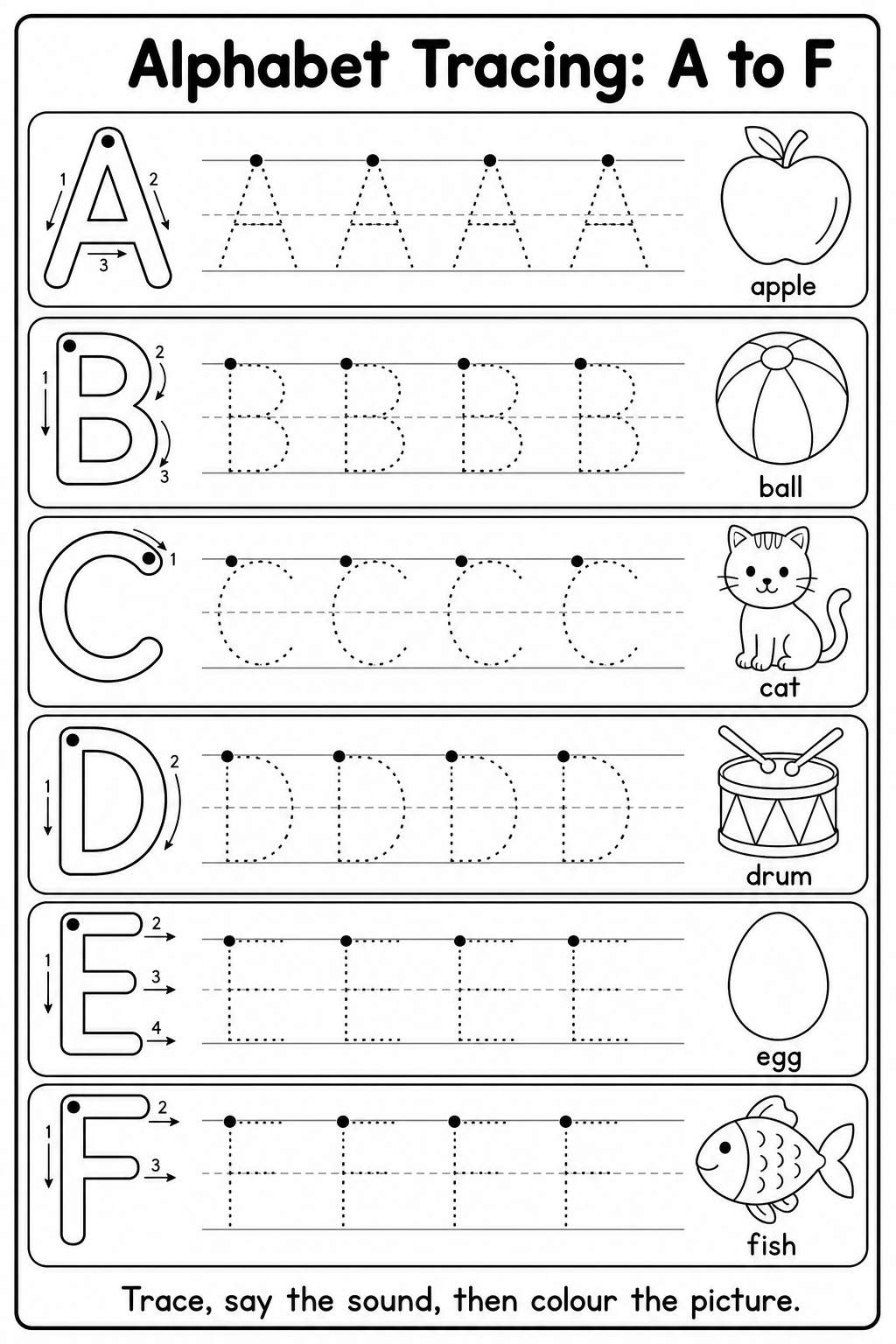 ⭐
Alphabet Tracing A to Z Worksheets for Kids📄 Printable Worksheets · Age 3-4
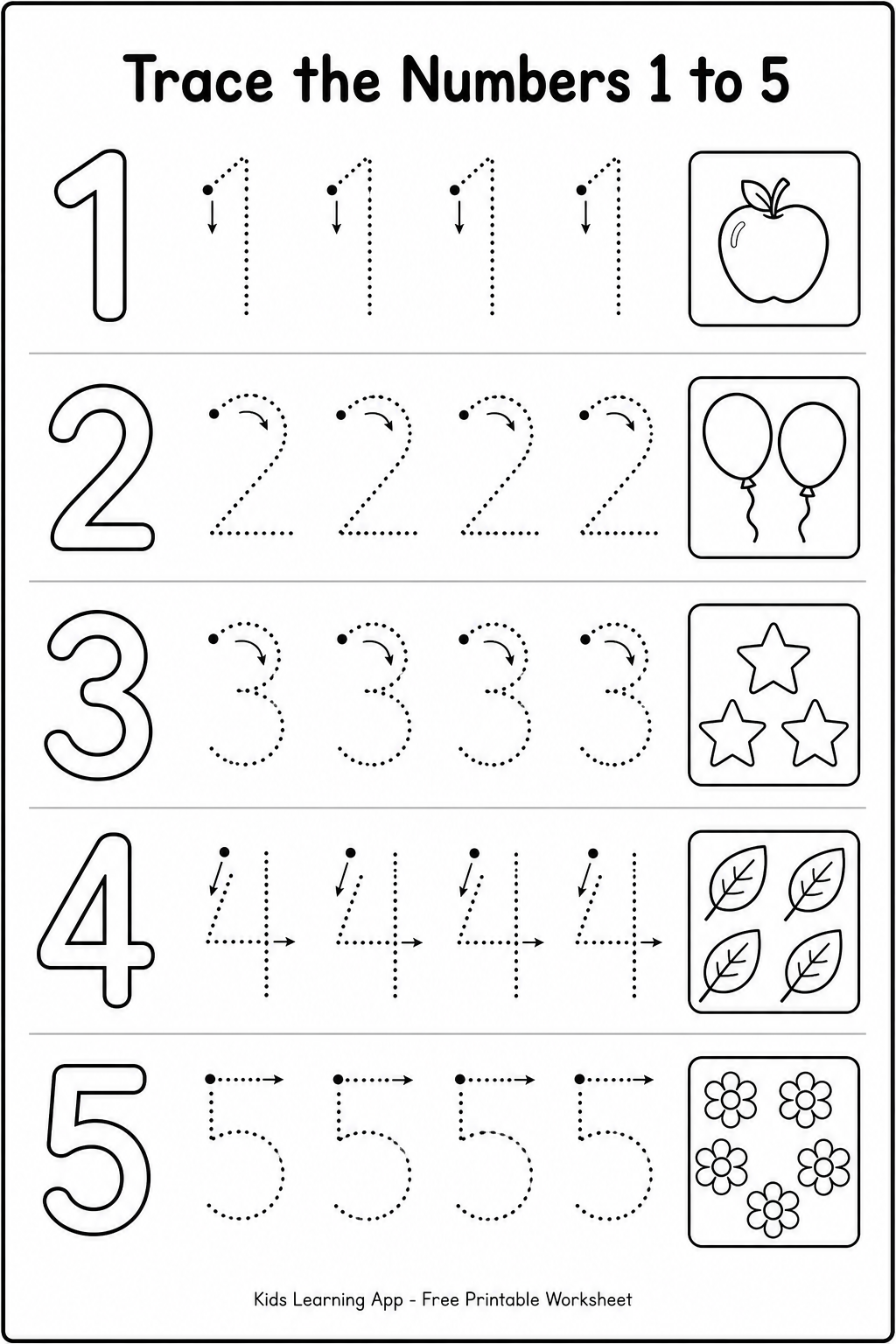 ⭐
Number Tracing 1 to 10 Worksheets for Kids📄 Printable Worksheets · Age 4-5
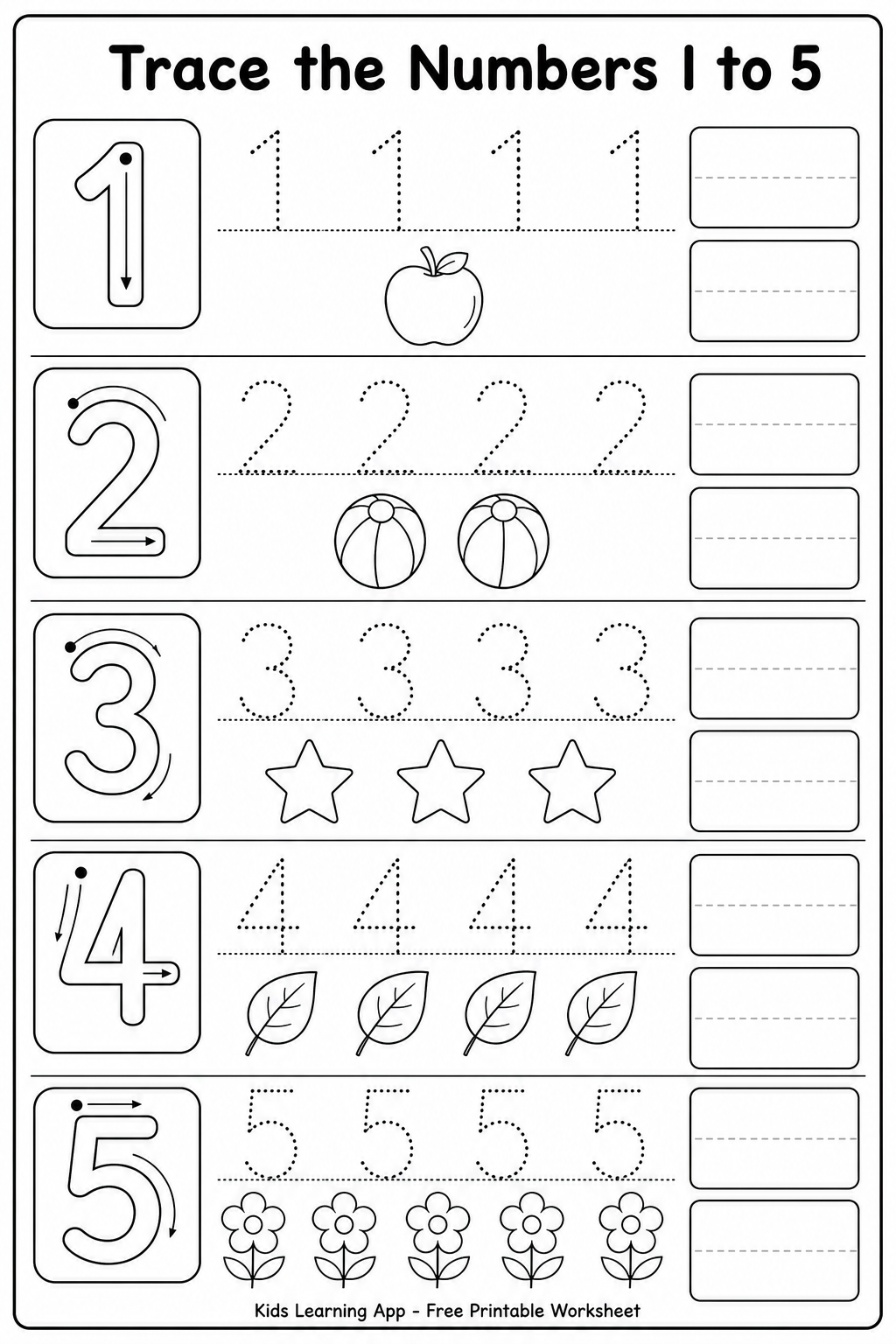 ⭐
Number Tracing 1 to 10 Worksheets for Kids📄 Printable Worksheets · Age 4-5
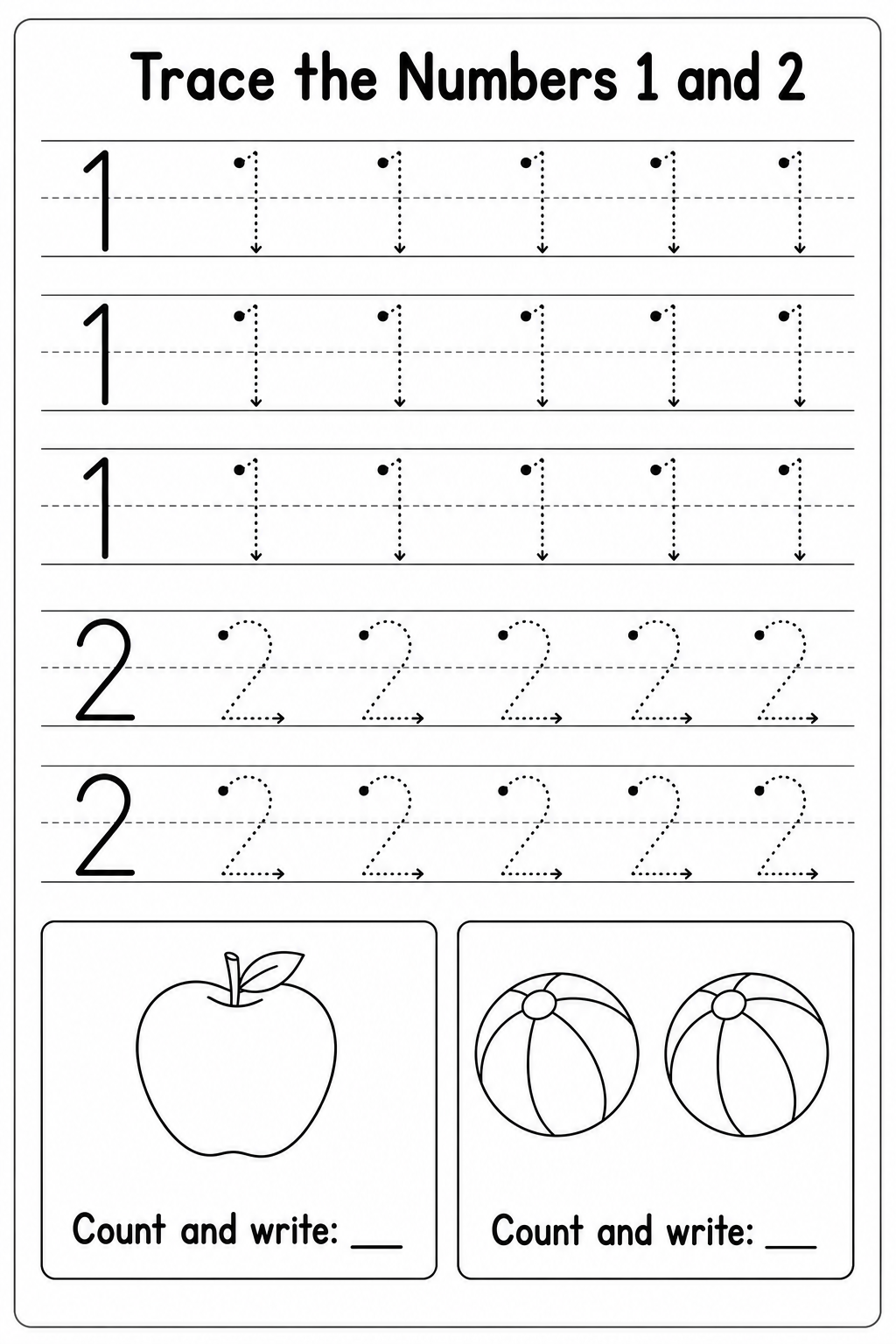 ⭐
Number Tracing 1 to 10 Worksheets for Kids📄 Printable Worksheets · Age 4-5
What these printable worksheets are
This collection brings together simple free printable worksheets for children aged about 2 to 10 years. Each activity works in two ways. Your child can tap and trace directly on a screen, or you can download the worksheet as a neat page and print it. The current set covers alphabet tracing from A to Z, number tracing from 1 to 10 and shapes worksheets where children trace, colour and match circles, squares, triangles and more.
The pages are deliberately plain: big guide lines, clear arrows, plenty of white space and no distracting clutter. That means a four year old can see exactly where the pencil should go, and a teacher can photocopy the same sheet for a whole class without wasting ink.
Skills children build
Worksheets are not just busy work. When used for short, happy sessions they build real school-readiness skills.
- Pencil grip and control — tracing strengthens the small muscles in the fingers and wrist.
- Letter recognition — children learn the shape, name and sound of each letter while they trace it.
- Number sense — writing 1 to 10 alongside counting pictures links the symbol with the quantity.
- Shape and pattern awareness — an early step towards geometry and sorting.
- Focus and patience — finishing one page from start to end is a small, satisfying goal.
- Hand–eye coordination — staying inside lines and dots takes practice and care.
How to play online and how to print
To play online, simply open an activity and let your child trace with a finger on a touchscreen or with the mouse on a computer. Nothing needs to be installed and there is no cost.
To use the printable version, open the activity, choose the print or download option, and print on ordinary A4 paper. A few practical tips:
- Print in black and white to save ink; colouring sections still work perfectly.
- Slip a printed sheet into a clear plastic folder and use a dry-wipe marker so the page can be reused many times.
- Print two or three copies of a tricky letter instead of a whole alphabet set at once.
- Keep finished pages in a folder so children can see their own progress over the weeks.
Ideas by age
Ages 2 to 3: keep it playful. Let toddlers scribble over the big dotted shapes with a thick crayon, name the shape or letter out loud, and stop after three or four minutes. At this age the aim is holding the crayon comfortably, not neat handwriting.
Ages 4 to 5: this is the sweet spot for tracing. Work through a few letters a week, say the sound as you trace, and then hunt for that letter on food packets or signboards. Number tracing pairs beautifully with counting real objects such as spoons, buttons or stones.
Ages 6 to 8: use the sheets as warm-ups. Ask children to trace a letter, then write it freehand beside it, or to draw three things that start with that sound. With shapes, challenge them to find and name shapes around the room before colouring the worksheet.
Tips for parents and teachers
- Short and regular beats long and rare. Five to ten focused minutes a day is more effective than an hour on Sunday.
- Say it while you write it. Speaking the letter sound or number name while tracing helps memory.
- Praise the effort, not only the neatness: "You stayed on the line the whole way!"
- Mix screens and paper. Trace once online, then print the same sheet for pencil practice.
- In the classroom, use printed sheets at learning corners, as morning work, or as gentle homework for revision.
- Finish a set with something to celebrate — our printable certificates and stars are a lovely reward for a completed folder.
What to try next
Once your child is confident with tracing and shapes, keep the momentum going. Our free printable activity books bundle several pages into one themed download, which is handy for travel, holidays or a quiet weekend afternoon. You can also return to this page regularly, as new free worksheets for preschool and primary learners are added over time.
Everything here is free to use at home and in school. Print as many copies as you need for your own children or your own class, and enjoy watching those first wobbly letters turn into confident writing.