Free Printable Alphabet Tracing Worksheets (A to Z)
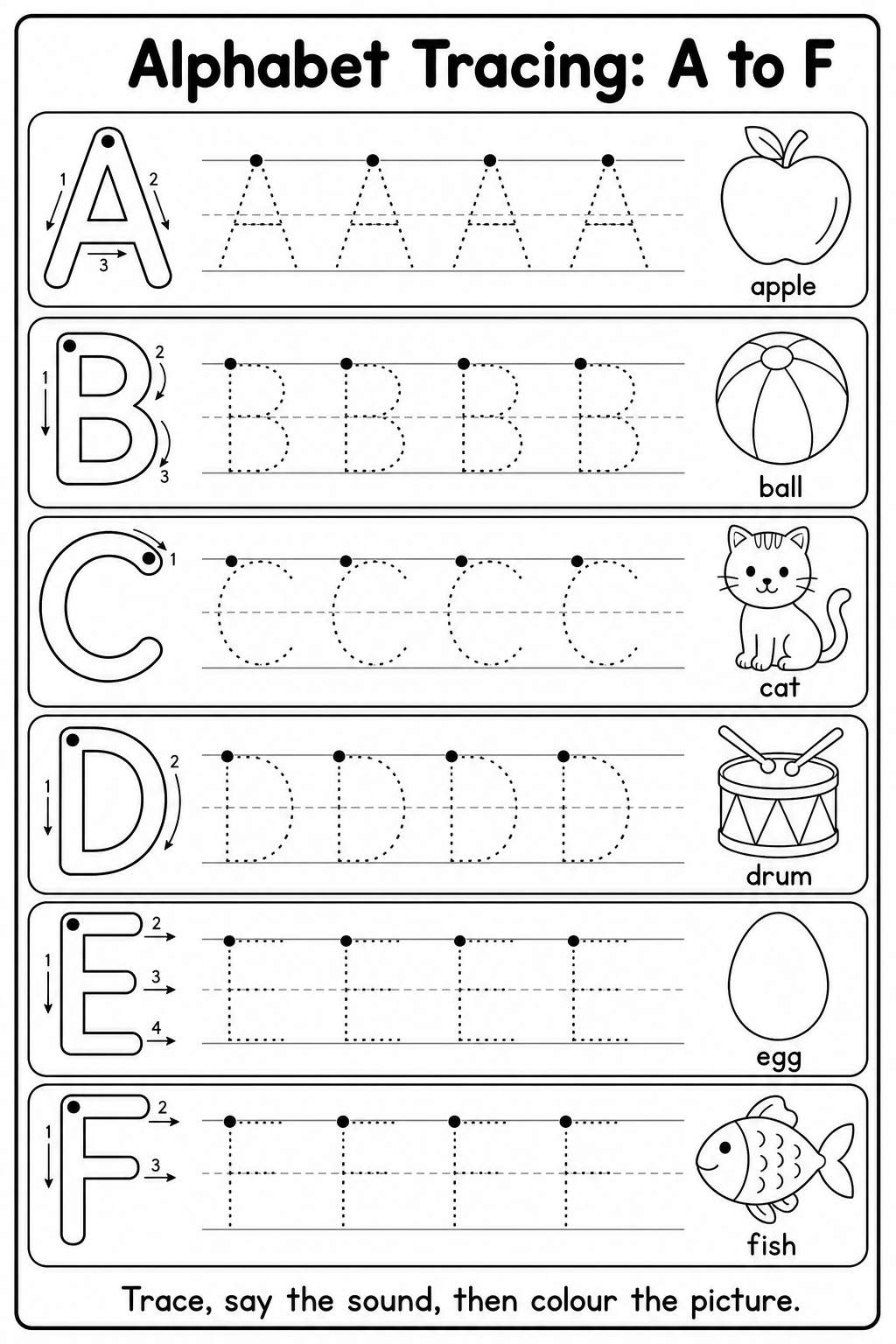
Help your child learn the English alphabet with these free printable alphabet tracing worksheets for kids. Each page shows big, clear uppercase letters with dotted outlines, start dots and arrows, so little hands know exactly where to begin. Children trace A to Z slowly, say the letter sound aloud, and colour the small picture beside each letter.
The pages are simple and uncluttered, which makes them perfect for preschool and kindergarten practice at home or in the classroom. Download the worksheet, print as many copies as you need, and let your child practise a few letters every day.
How to play
- Download the PDF and print the pages on A4 paper. Print one page at a time so your child is not in a hurry.
- Give your child a thick pencil or crayon. Start at the dot and follow the arrows to trace each dotted letter.
- Say the letter name and its sound together, then name the picture next to it (A for apple, B for ball).
- Colour the picture, then tick the box at the bottom of the page when all the letters are done.
While tracing, your child is doing much more than making lines. Following the dotted shapes builds pencil grip, hand strength and the fine motor control needed for neat handwriting later. Starting at the dot and moving in the right direction teaches correct letter formation, which is hard to correct once a wrong habit forms. Saying each letter name and sound while tracing links the written shape to the sound, an early reading skill. The picture clues build vocabulary too. Five to ten minutes a day is enough for young children. Praise effort, not neatness, and reprint any page your child enjoys repeating.
Frequently asked questions
What age are alphabet tracing worksheets suitable for?
Should my child learn uppercase or lowercase letters first?
How many letters should we practise in one sitting?
Can I print these worksheets more than once?
More printable worksheets
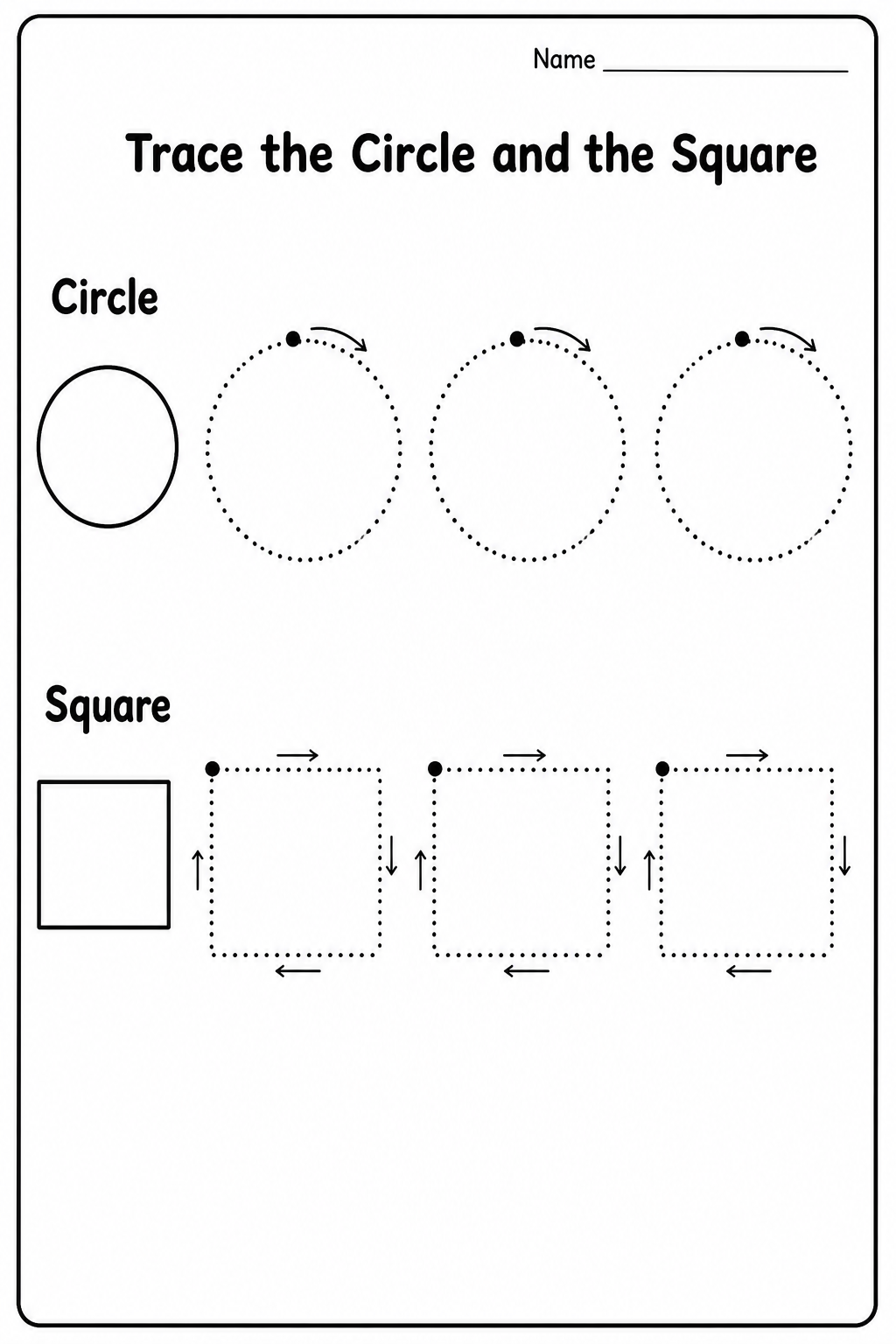 ⭐
Shapes Worksheets for Kids: Trace, Colour and Match📄 Printable Worksheets · Age 3-4
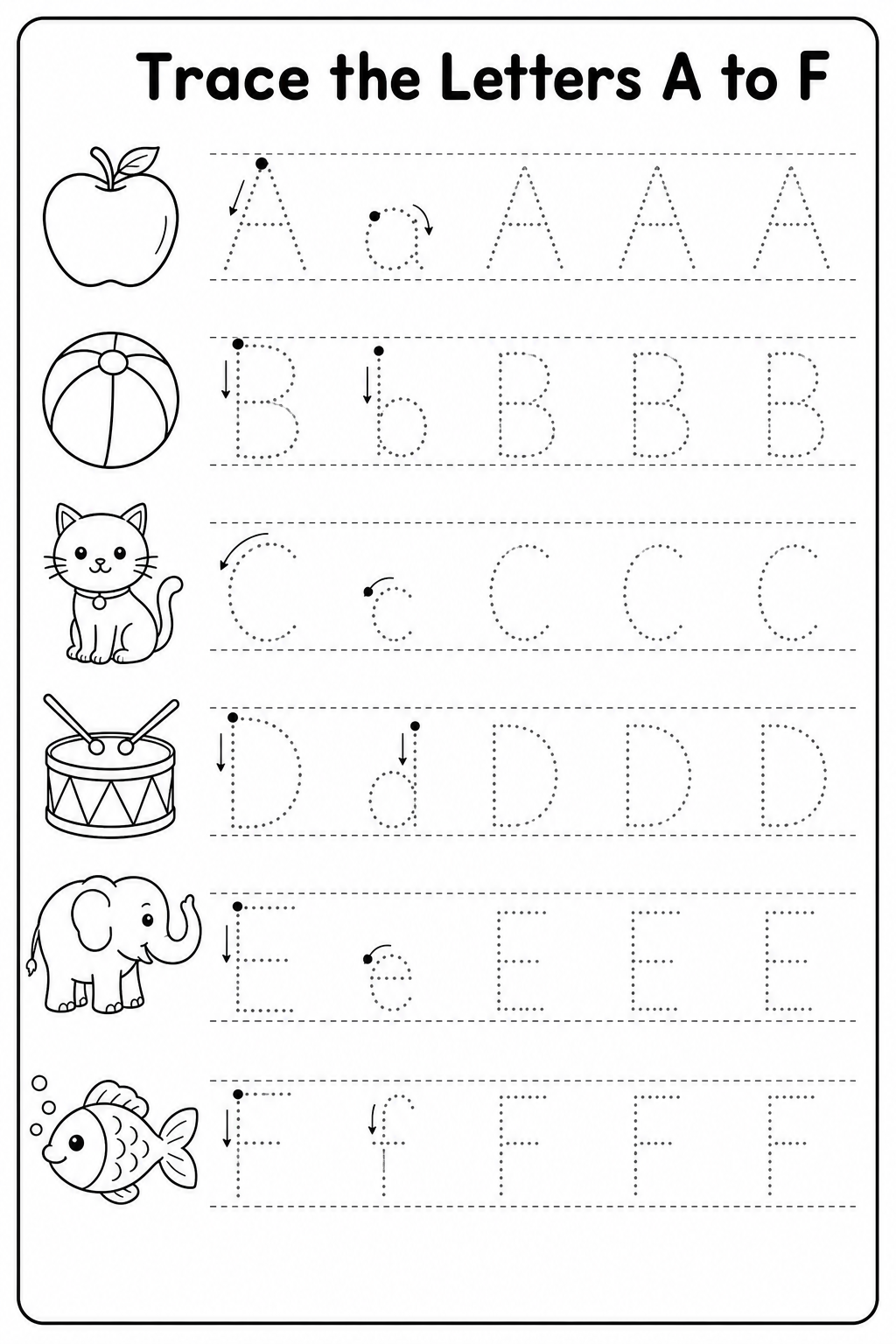 ⭐
Alphabet Tracing A to Z Worksheets for Kids📄 Printable Worksheets · Age 4-5
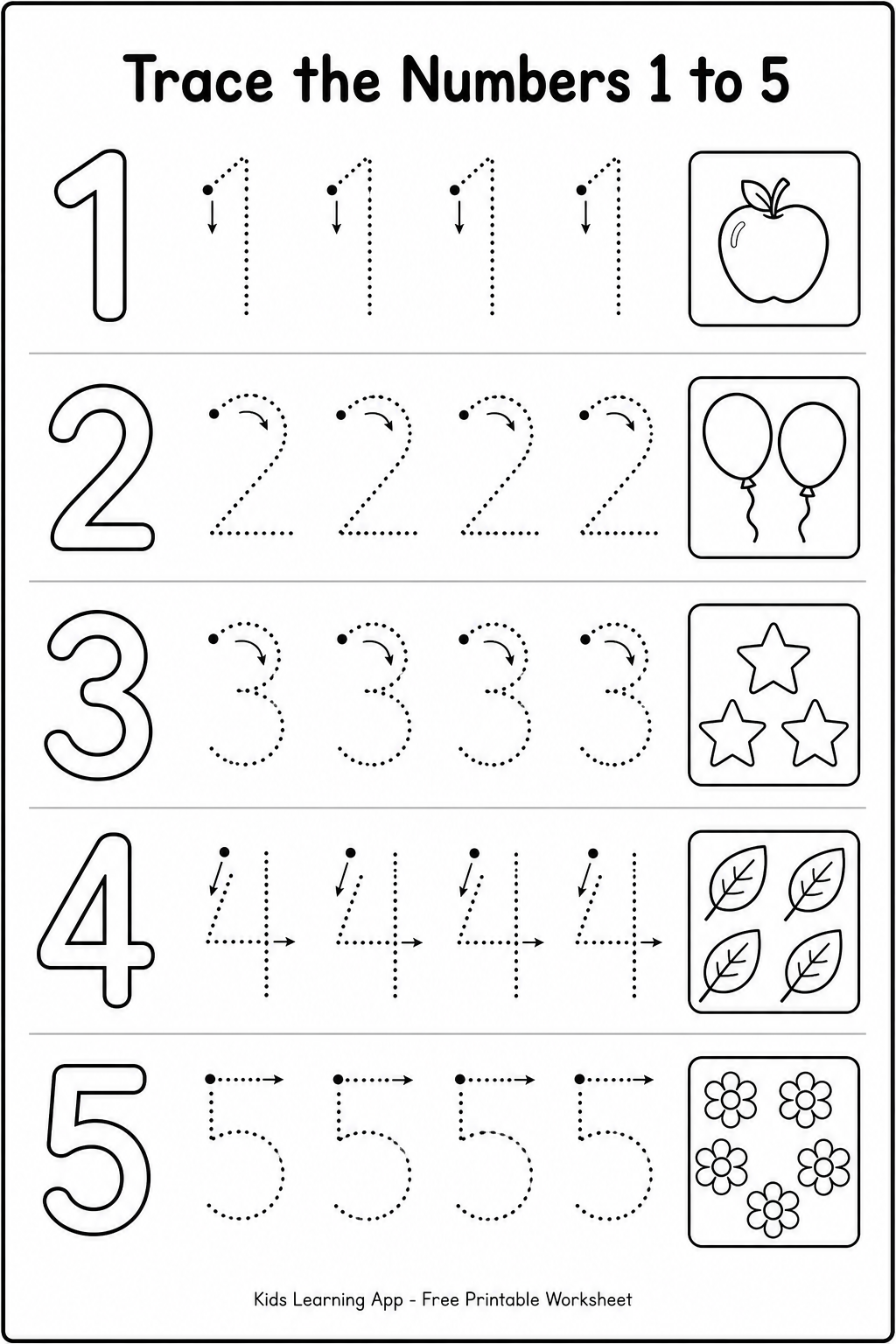 ⭐
Number Tracing 1 to 10 Worksheets for Kids📄 Printable Worksheets · Age 4-5
 ⭐
Number Tracing 1 to 10 Worksheets for Kids📄 Printable Worksheets · Age 4-5
 ⭐
Number Tracing 1 to 10 Worksheets for Kids📄 Printable Worksheets · Age 4-5
More Alphabet activities
Updated 31 Oct 2026