Number Bonds to 5 with Ten Frames
Five is one of the first numbers children learn to break apart, and this free activity makes it easy. Your child sees a frame with some dots filled in and some empty, then works out the missing part that makes 5. Pairs like 1 and 4, 2 and 3, or 0 and 5 start to feel familiar and automatic.
This is the beginning of part-part-whole thinking, the same idea children later use for number bonds to 10 and 20. No printing needed, and each round gives a fresh set of friendly questions for little learners.
How to play
- Look at the frame and count the dots that are already there. Say the number out loud.
- Ask: how many more dots are needed to make 5? Count the empty boxes to check.
- Type the missing part into the box and submit your answer.
- Say the whole bond together, like "2 and 3 make 5", then move to the next question.
This activity builds early addition sense long before your child writes sums. By matching dots to empty spaces, children see that 5 can be made in several ways: 0 and 5, 1 and 4, 2 and 3, and the reverse pairs too. That is part-part-whole understanding, the foundation of mental maths. Children also practise subitising, which means recognising small amounts without counting one by one. At home, repeat the same idea with five buttons, spoons or crayons: hide some under a cup and ask how many are hidden. Short, playful sessions of five to ten minutes work best at this age.
Frequently asked questions
What are number bonds to 5?
What age is this activity suitable for?
Is this activity free to use?
How can I practise number bonds away from the screen?
More ten frames & number bonds
More Numbers activities
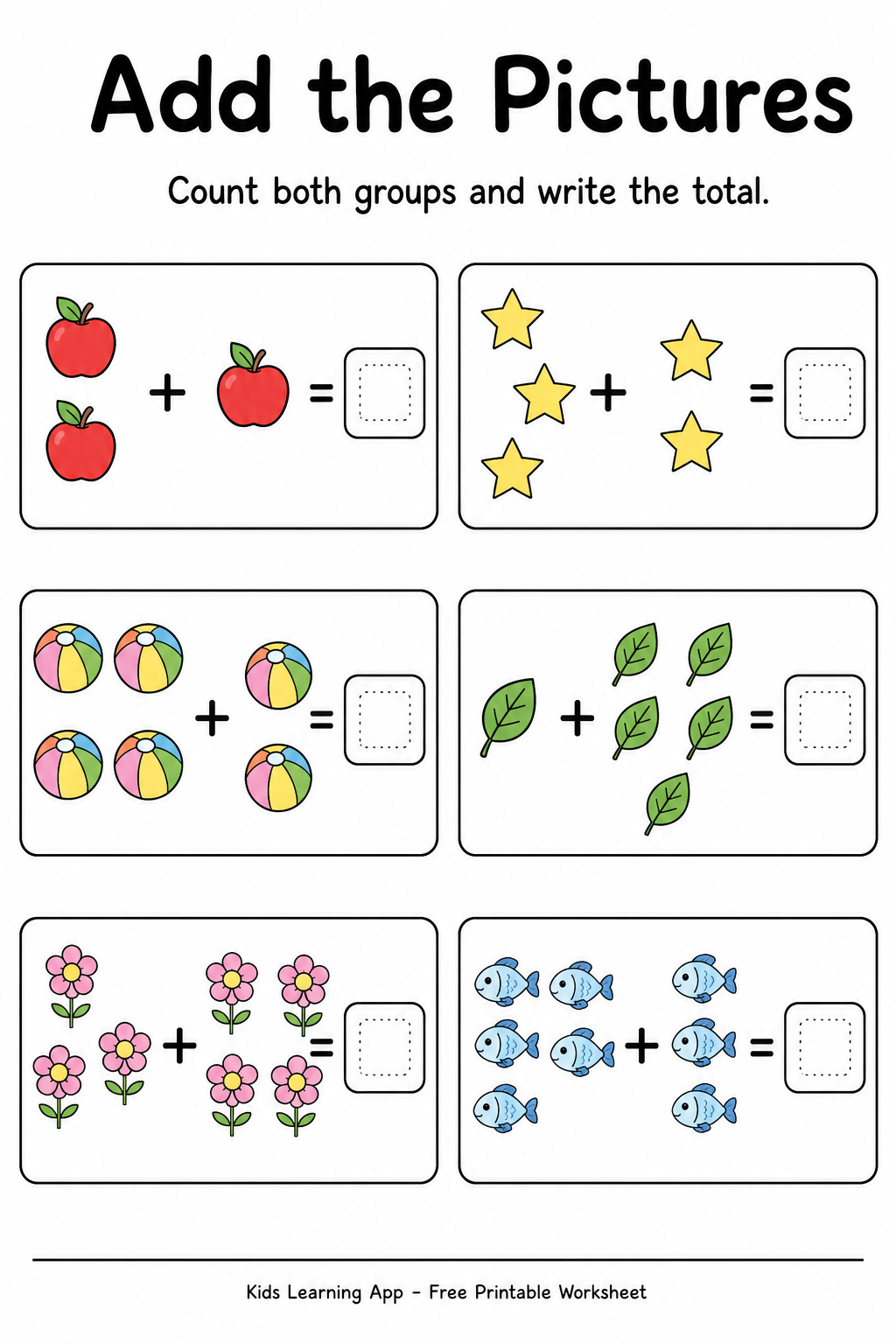 ⭐
Addition Within 10 Worksheets for Kids📄 Printable Worksheets · Age 5-6
🏆⭐
Maths Star Certificate for Kids🏆 Certificates & Stars · Age 5-6
⏱️⭐
Times Tables Speed Drill for Kids⏱️ Mental Maths Drill · Age 8-10
⚖️⭐
Even or Odd Numbers 1 to 10 Quiz for Kids⚖️ Even and Odd · Age 5-6
🐸⭐
Skip Counting by 10s, 25s and 100s for Kids🐸 Skip Counting · Age 6-8
🧮⭐
Read 3-Digit Numbers from Place Value Blocks for Kids🧮 Place Value Blocks · Age 6-8
📏⭐
Number Line 0 to 100 by Tens for Kids📏 Number Line · Age 6-8
🧮⭐
Mixed Column Addition and Subtraction (3-Digit) for Kids🧮 Column Addition & Subtraction · Age 6-8
Updated 5 Nov 2026