Trace the Shapes: Circle, Square, Triangle and Star
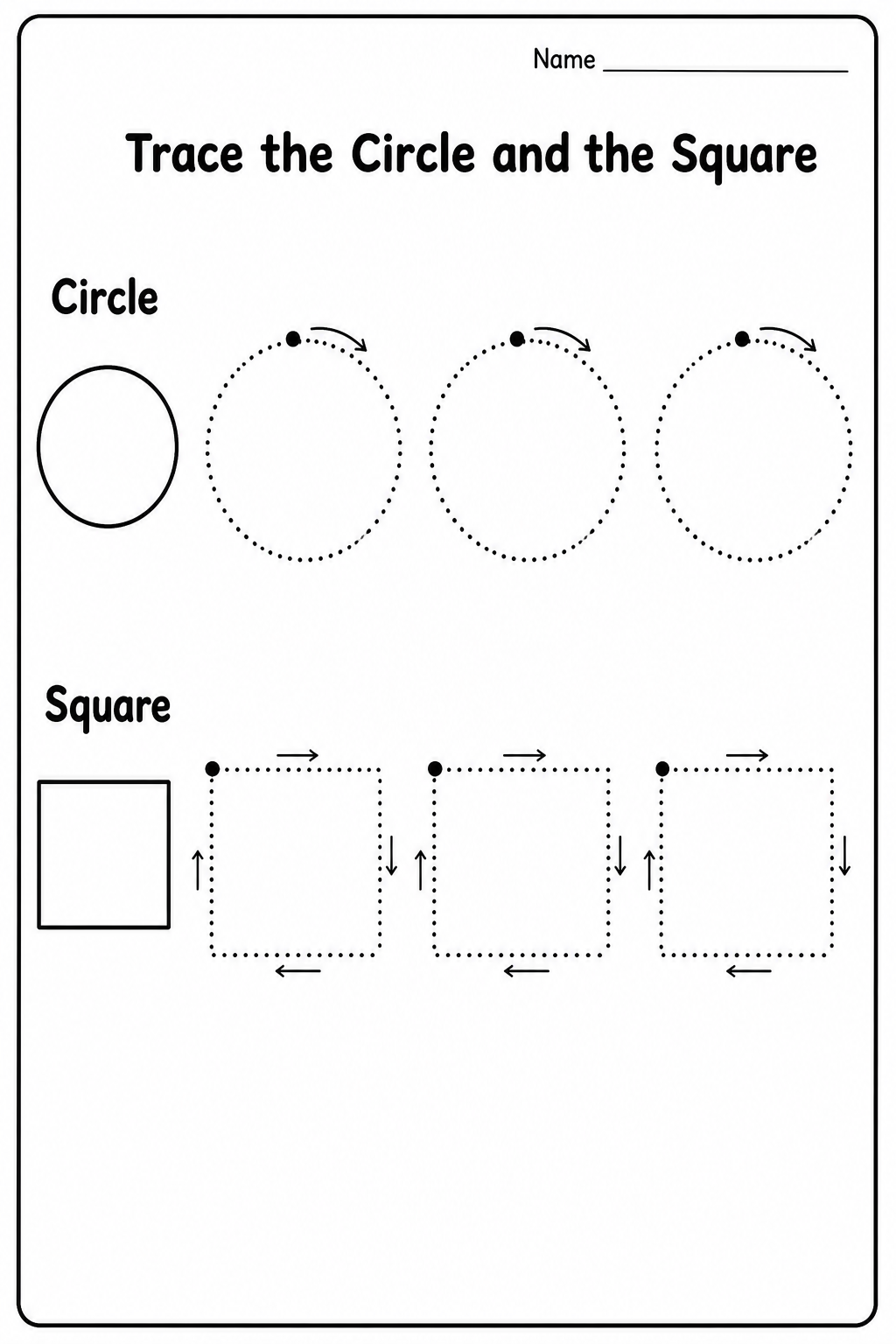
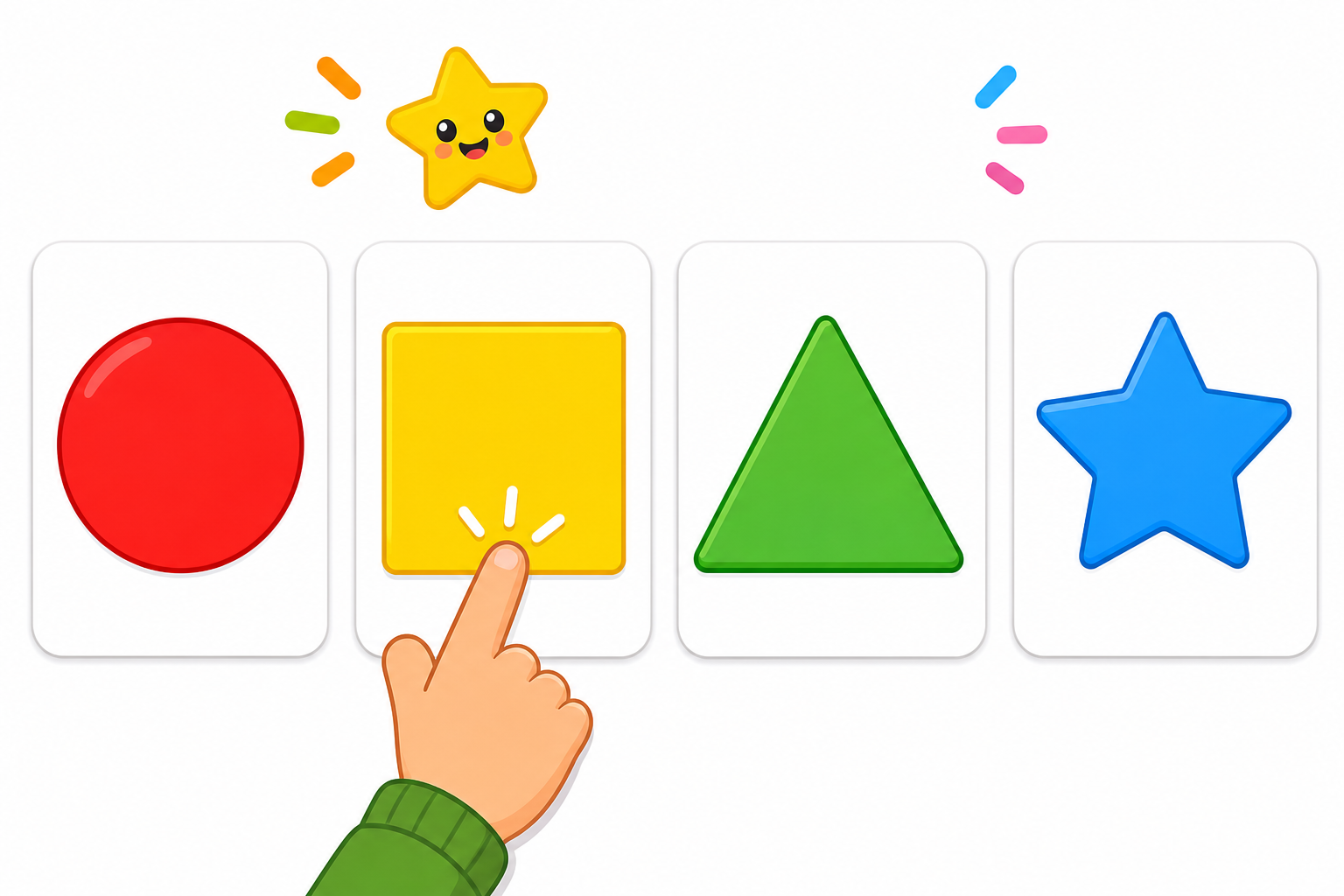
Trace the Shapes is a gentle first tracing activity for little hands. Children follow dotted lines to draw a circle, square, triangle and star, then say each shape name out loud. The lines are big and simple, so preschoolers aged 3-4 can finish happily without feeling rushed.
This free printable worksheet helps with pencil grip, hand control and early shape recognition, all skills that support writing later on. Parents and teachers can use it at home, in playschool or as a quiet-time activity. Print as many copies as you like and let your child colour the shapes afterwards.
How to play
- Print the worksheet or open it on screen, and give your child a thick pencil or crayon.
- Point to the first shape, say its name together, and trace it in the air with a finger.
- Ask your child to trace along the dotted lines, starting at the big dot and going slowly.
- Name each shape again at the end, then colour the shapes or look for them around the room.
At three and four, children are just learning to control a pencil, so neat lines are not the goal. Wobbly tracing is normal and healthy. Praise the effort, not the result, and stop while your child is still enjoying it, even if that is after one or two shapes. You can repeat the same worksheet another day; repetition builds confidence and muscle memory. Try finger tracing on a table first, then move to crayons, which are easier to hold than pencils. Finish by spotting real shapes together, such as a round plate, a square window or a triangle slice of toast.
Frequently asked questions
What age is this shape tracing worksheet for?
Is this shapes worksheet free to print?
Should my child use a pencil or a crayon?
My child's tracing goes outside the lines. Is that a problem?
How can we practise shapes away from the worksheet?
More shapes
More Shapes activities
 ⭐
 ⭐
Updated 31 Oct 2026