Spot the Difference: Park Playground Picture Puzzle
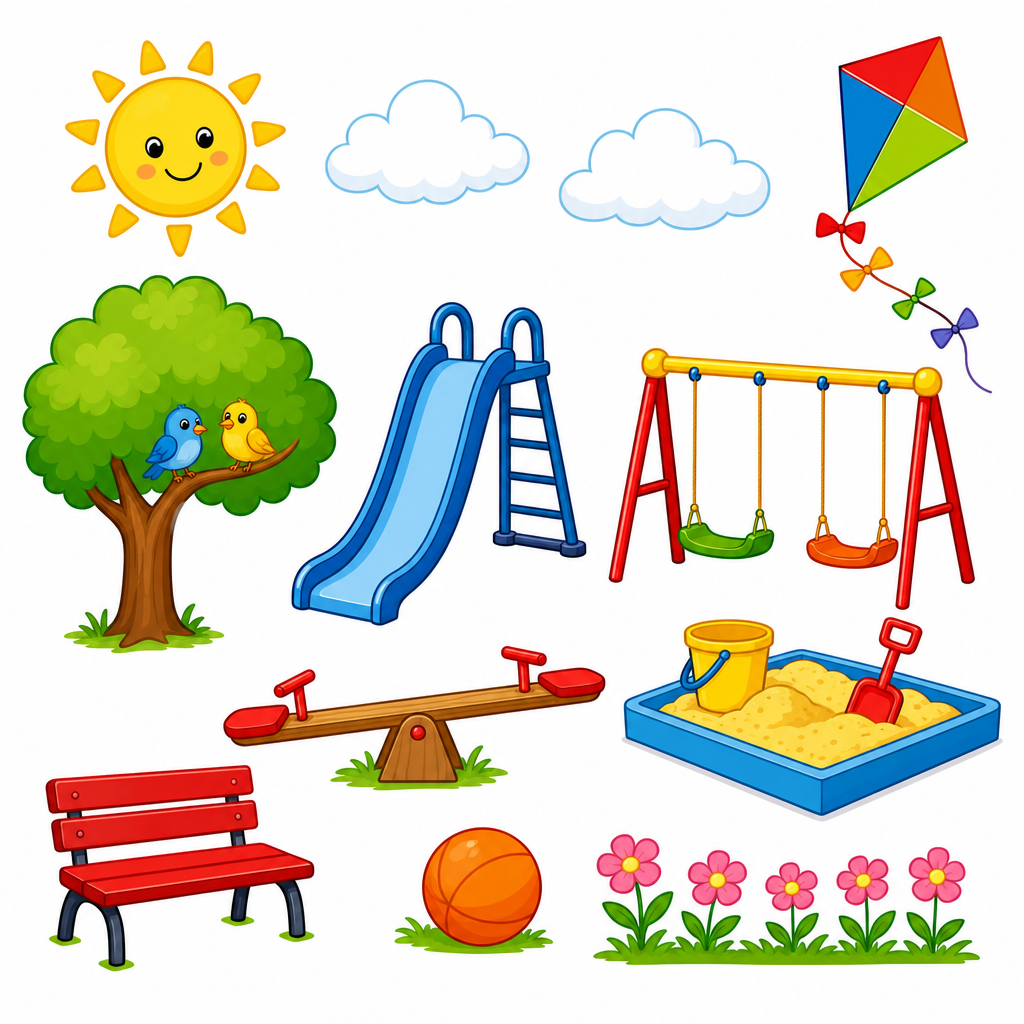
Take your child to a sunny park without leaving home! In this free spot the difference activity for kids, two cheerful playground pictures look the same at first glance. Look again, and small changes appear: a missing cloud, a bird that flew away, a bucket that is not in the sandpit any more.
There are 6 differences hidden between Picture A and Picture B. Children compare the two scenes piece by piece and tap each change they find. It is a gentle, screen-friendly puzzle for preschool and primary learners, and it works well as a printable worksheet in class too.
How to play
- Look at Picture A for a few moments and name the things you can see: the slide, the swings, the tree, the kite.
- Now look at Picture B. Compare the two pictures part by part — sky first, then the middle, then the ground.
- Click or tap on each difference you spot in Picture B. There are 6 to find in all.
- When you have found them all, say each change out loud in a full sentence, such as "The ball is a different colour."
Spot the difference puzzles are small workouts for a child's eyes and brain. While hunting for changes in the playground scene, your child practises visual discrimination — the same skill used to tell b from d or 6 from 9 while reading and writing. Scanning the picture in an order (sky, middle, ground) builds a systematic search habit that later helps with proofreading and maths checking. Describing each difference adds vocabulary for colours, positions and park objects. Best of all, it strengthens patience and concentration. Sit beside your child, take turns finding one change each, and talk about what you notice.
Frequently asked questions
How many differences are there in this picture puzzle?
What age is this spot the difference activity for?
Can I print this activity for my classroom?
How do spot the difference puzzles help with learning?
More spot the difference
 ⭐
Updated 5 Nov 2026